Venice.
There are no cars in Venice.Movement is by foot, by gondola, by water taxi (the Aman’s private launch is the move from the airport).
The luxury infrastructure is one of Europe’s most concentrated. Aman Venice (24 rooms in the 16th-century Palazzo Papadopoli on the Grand Canal — Kafele’s TBT-stable anchor for the city), Belmond Hotel Cipriani (on Giudecca Island, with private boat to St. Mark’s), The Gritti Palace (the 1475 palazzo turned grand hotel). For ultra-luxury extensions, Cheval Blanc San Domenico (Italian Hotel Cipriani sister) and JW Marriott Venice Resort on the private Isola delle Rose.
The trip works as 3–4 nights. 90 days visa-free Schengen. Best windows April–May and September–October (Venice has a real winter and a real summer; spring + fall are the right windows). Avoid August (heat + crowds) and Acqua Alta season (October–March flooding). Pair with Verona, Padua, or the Dolomites for the northern Italy circuit.

Before you arrive.

421 to today.
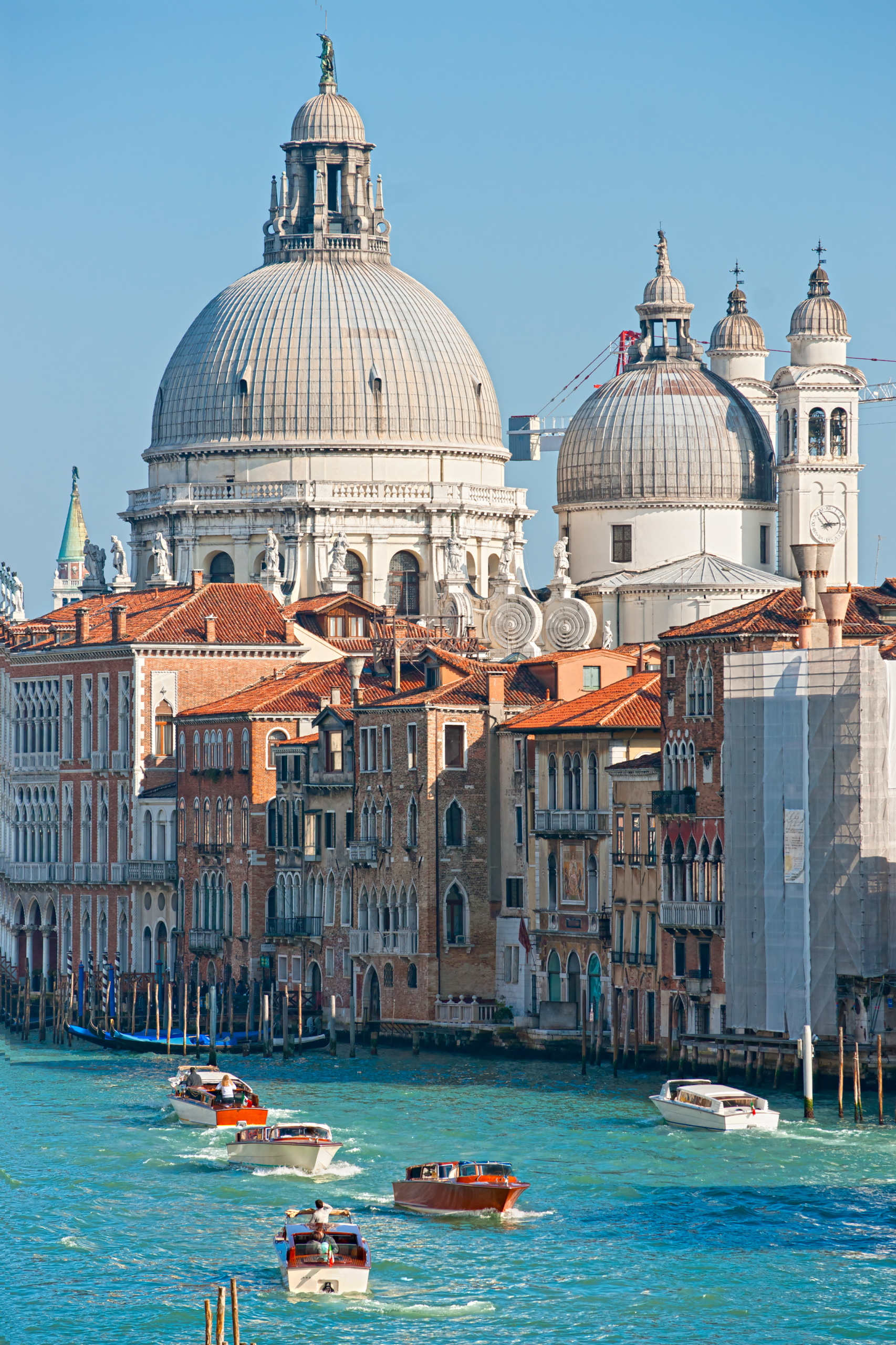
Venice has no streets in the ordinary sense. 118 islands, 177 canals, 438 bridges, and not a single car. Movement is on foot through the labyrinth of calli or on the water — gondola, vaporetto, private launch. The architecture is its own register: Venetian Gothic palazzi, Byzantine domes, Renaissance marble, all stacked directly on the lagoon and reflected back from the water. St. Mark’s is the gravitational center. The Grand Canal is the spine.
But you don’t come to Venice for the monuments alone. You come for the canals at 6am, before the day-trippers arrive — the water still, the light cutting between the palazzi, the only sound a gondolier’s oar. You come for the private launch across the lagoon to Burano’s pastel houses, for the gold mosaics of St. Mark’s empty at the first opening hour, for a Bellini at the bar where it was invented. The reward of Venice isn’t checking the famous corners. It’s the hours nobody else is awake for.
Venice before it wakes.
Venice has two faces. From roughly 10am to 5pm, the day-tripper tour groups arrive by train from Mestre and Padua and the path between the Rialto and St. Mark’s becomes a single shuffling crowd. Before that window, the city belongs to whoever is awake. At 6am the canals are mirror-still, the light cuts low between the palazzi, and the only traffic is a delivery barge and the dawn gondolier rowing home.
This is the hour to walk St. Mark’s Square empty, to cross the Rialto with no one on it, to stand on a bridge in Dorsoduro and hear nothing but water. A private gondola at this hour — not the afternoon cliché but the actual quiet — runs the back canals of Cannaregio and San Polo where the postcard crowds never reach. The Aman Venice and Belmond Cipriani both run private launches; either can have you on the water before the city stirs.
By the time the first crowds arrive, you’ve already had the Venice everyone else flies home without seeing. You spend the loud hours on Giudecca or out in the lagoon, and you come back when the day-trippers leave.
St. Mark’s and the Doge’s Palace.
St. Mark’s Basilica was built to house the relics of the evangelist Mark, smuggled out of Alexandria by two Venetian merchants in 828 AD. The current church — gold-ground Byzantine mosaics across more than 8,000 square meters of ceiling, the jeweled Pala d’Oro altarpiece, the bronze horses looted from Constantinople in 1204 — took its present form from 1063 and was consecrated in 1094. It is the most opulent church in Italy, and it is free to enter. Which is why you go at the 8:30am first opening, before the cruise crowd.
Next door, the Doge’s Palace (Palazzo Ducale) was the seat of the Venetian Republic for nearly a thousand years — the doge’s residence, the senate chamber, the courts, and the prison, all in one Gothic complex rebuilt from 1340. The Secret Itinerary tour takes you off the public route: the interrogation rooms, the lead-roofed Piombi cells where Casanova was held, the Bridge of Sighs from the inside.
Together they are the argument of Venice — sacred wealth and worldly power, both built to overwhelm. See them at the quiet hour and they hand you something the midday crowds never get: scale without the scrum.
Rialto to the Peggy Guggenheim.
This walk isn’t on most guides. It crosses the city from its commercial heart to its art quarter, threading the Grand Canal twice. The whole arc is roughly 3 kilometers of calli, bridges, and campi — and it’s how you actually read how Venice built itself.
Start at the Rialto Bridge. The oldest crossing of the Grand Canal — a pontoon bridge stood here from 1173; the present single-span stone bridge, designed by Antonio da Ponte, was finished in 1591. For centuries the Rialto was the commercial engine of the republic. The morning fish and produce markets beside it (Mercato di Rialto) still trade the way they have for 700 years.
Walk south through San Polo, the city’s oldest sestiere — quiet campi, the colossal Frari church (Titian’s tomb and his “Assumption” altarpiece), artisan workshops the tour groups never find. This is working Venice, away from the St. Mark’s crush.
Cross into Dorsoduro, the art quarter. The Gallerie dell’Accademia holds the greatest collection of Venetian painting in the world — Bellini, Carpaccio, Titian, Veronese, Tintoretto. A few minutes along the canal stands the Punta della Dogana, the old customs house turned contemporary-art museum.
End at the Peggy Guggenheim Collection, in the Palazzo Venier dei Leoni on the Grand Canal — the heiress’s home for three decades, opened to the public in 1951. Picasso, Pollock, Ernst, Brancusi, Calder, in the one unfinished single-story palazzo on the canal. In Biennale years (the international art exhibition founded in 1895, the oldest of its kind), the whole quarter turns into a contemporary-art city.
One afternoon. Merchant Venice to modern Venice. The complete arc of how the city made, then collected, the world.
The lagoon, by private launch.
Most visitors never leave the historic center. The mistake is enormous. The Venetian lagoon holds the islands where the civilization actually began — and where its crafts are still alive. A private launch turns a chaotic public-vaporetto slog into a half-day on open water with no crowds.
Murano is glass. In 1291 the republic forced every glass furnace out of the dense city and onto this island to stop the fires — and to guard the secret. For seven centuries the master glassblowers have worked here; the trade was so vital that artisans were forbidden to leave. A private studio visit puts you at the furnace with a master, watching molten glass pulled into form, with the option to commission a piece and ship it home.
Burano is lace and color — a fishing village of saturated pastel houses, each painted a different shade so returning fishermen could find their door through the lagoon fog. Burano lace was the most prized in Europe by the 16th century; the Scuola dei Merletti (lace school, 1872) still trains the craft.
Torcello is the origin. This near-empty island was the first lagoon settlement, once a city of 20,000, more powerful than Venice itself. Its Basilica of Santa Maria Assunta — founded in 639 AD — holds Veneto-Byzantine mosaics older than anything in St. Mark’s. Hemingway wrote here. It’s the quietest place in the lagoon.
Run the three in one afternoon and you understand where Venice came from, and why it still makes things by hand.
Skip the midday gondola line.
The standard 30-minute gondola at the St. Mark’s stands runs a fixed €90 daytime rate, in a queue of other gondolas, on the busiest water in the city. The cliché executed at the worst possible hour. Take a private gondola at 7am instead — the back canals of Cannaregio, empty water, the actual quiet the postcard promises.
Skip the free Murano glass tours.
Touts near St. Mark’s offer “free” speedboat rides to Murano — they end in a high-pressure factory showroom built for the cruise trade. If glass matters to you, we arrange a private visit to one of the remaining family master-glassblower studios — closed to walk-ins — where the work is real and so is the piece you commission.
Mind the square-side café bill.
Caffè Florian and Quadri in St. Mark’s are genuine history — Florian opened in 1720 — but a seated coffee with the orchestra playing runs €15–€20 plus a music surcharge. Stand at the bar for a fraction, or have the experience at the right moment: one aperitivo at dusk when the square empties and the orchestras trade tunes across the piazza.

Where you sleep matters.
Aman Venice
Aman occupies the Palazzo Papadopoli, a 16th-century palace on the Grand Canal — just 24 rooms beneath original Tiepolo-school frescoes, the top floor still the private residence of the family. The most discreet ultra-luxury address in the city, and the one we anchor a Venice trip to.
Belmond Hotel Cipriani
The Cipriani sits on the tip of Giudecca island, a 5-minute private-launch hop from St. Mark’s — close enough to be central, far enough to be a sanctuary. Sweeping views across the lagoon to the Doge’s Palace, lush gardens, and one of the only true resort pools in Venice. The address for travelers who want space and privacy without leaving the city.
The Gritti Palace
The Gritti occupies a 15th-century noble residence on the Grand Canal in San Marco — the most central of the great Venice addresses, a short walk to St. Mark’s and the Salute directly across the water. Venetian antiques, Murano chandeliers, and the city’s most storied canal-side terrace. A Luxury Collection grande dame.
Hotel Danieli
A five-star grande dame on the Riva degli Schiavoni, steps from the Doge’s Palace. The oldest wing is the 14th-century Palazzo Dandolo — spectacular Venetian Gothic. Recently restored, the most theatrical lobby in the city.
The St. Regis Venice
Grand Canal at San Marco, near the Salute crossing. Sleek contemporary interiors and panoramic lagoon terraces. The polished, design-forward alternative to the heritage palazzi — with St. Regis butler service.
Ca’ Sagredo Hotel
A 15th-century palazzo on the Grand Canal in Cannaregio — declared a National Monument, with frescoes by Tiepolo and Longhi. 42 rooms inside a working art collection, quieter than the San Marco crush.

The lagoon table. Six favorites.
The Michelin tier.
Glam Enrico Bartolini
Venice’s highest-rated kitchen, inside the Palazzo Venart luxury hotel — chef Enrico Bartolini’s contemporary cuisine using lagoon and Veneto ingredients. Two Michelin stars. Two gardens for dining and post-dinner drinks. Book 4–6 weeks ahead; concierge assistance essential.
Ristorante Quadri
Above the historic Caffè Quadri on St. Mark’s Square, under frescoed ceilings overlooking the piazza. Run by the Alajmo family of Le Calandre fame. One Michelin star — the most theatrical address in the city, the square framed in every window.
Oro · Belmond Hotel Cipriani
Chef Riccardo Canella’s kitchen at the Cipriani on Giudecca — the experience begins with a private launch from St. Mark’s across the basin. One Michelin star, with a view over the lagoon to the Doge’s Palace that earns the trip alone.
Three more across the lagoon.
Local
Modern, minimalist, an open kitchen in Castello — chef Salvatore Sodano’s contemporary take on Venetian and lagoon cooking. One Michelin star. The city’s best balance of ambition and warmth, away from the St. Mark’s crowds.
Venissa
On the island of Mazzorbo beside Burano, set in a walled vineyard growing the rare native Dorona grape. One Michelin star plus a Green Star for sustainability — hyper-local lagoon cooking. Pair it with the island afternoon; arrive by private launch.
Harry’s Bar
Opened by Giuseppe Cipriani in 1931, steps from St. Mark’s. The Bellini was invented here; so was beef carpaccio. Hemingway’s table. Not a Michelin kitchen — an institution. One Bellini, one carpaccio, standing or seated, then move on. The rite of passage.
Want a chef in your palazzo?
For longer stays or special dietary protocols — recovery nutrition, performance macros, post-training meals — we arrange a private Venetian chef to cook in your suite or palazzo. Rialto market run included. Single dinners or three meals a day. Quietly handled.

How the city moves.
VCE → your hotel dock.
Marco Polo Airport (VCE). ~13km · 30 min by private water taxi direct to the hotel dock. The only correct landing into Venice.
Private Water Taxi. A mahogany Riva or modern launch — meet-and-greet at arrivals, bags handled, straight across the lagoon. The first sight of the city is from the water.
Avoid the Alilaguna ferry, avoid the bus + walk option. Both end with you dragging luggage over bridges. The water taxi is the move.
A city without cars.
There are no cars in Venice. Every movement is on foot or on the water. Once you’re at the hotel, the only transport is private water taxi, vaporetto (public waterbus), or gondola.
Private water taxi for the day — same captain, on call. Essential for Murano, Burano, Torcello island day, the Lido, or hotel-to-restaurant runs across the Grand Canal.
Walking is the city. Allow 2× the Google Maps time — bridges, dead ends, the labyrinth of calli. The Hotel Cipriani and Aman Venice have private launch service to St. Mark’s on demand.
What you’ll actually do in Venice.

What you actually need.
What’s required, what’s smart.
What to pack before you fly.
How Venice reads on the body.

What we tell you that nobody else does.
The city is a labyrinth on water.
There is no driving in Venice. No Uber, no FreeNow, no taxi pulling up to the door. Every movement is on foot — across hundreds of stepped bridges — or by water taxi. The private water-taxi-from-VCE landing is non-negotiable; everything else makes you a tourist dragging luggage over a bridge.
What we do about it: private water taxi airport landing direct to your hotel dock, a captain on call for the trip, hotel-launch service for cross-canal lunches and dinners. The city becomes effortless when the water is your road.
St. Mark’s Square submerges first.
From October through March, lagoon high tides push water up through the drains into St. Mark’s Square and the lower calli. The MOSE barrier mitigates the worst but doesn’t eliminate the flooding. Some days you walk over raised platforms; some days the platforms float.
The plan: we monitor the tide forecasts 14 days out. Acqua alta–heavy days get rebuilt — interior experiences (Doge’s Palace, Murano studios, lunch at Cipriani) move forward, walking St. Mark’s pushes to a low-tide window.
The cruise-day-tripper hours.
Venice limited cruise-ship arrivals in 2021, but day-tripper tour groups still arrive by train from Mestre and Padua and concentrate around St. Mark’s, Rialto, and the Ponte di Rialto from 10am to 4pm. The piazzas become unmovable.
The fix: we run the schedule inverted — major sites before 10am (private after-hours and before-hours slots) or after 5pm, then lunch on Giudecca (across the channel from the chaos), Murano + Burano in the afternoon when the day-trippers are bottlenecked in St. Mark’s.
You’re in the most expensive city in Italy.
Bellinis at Harry’s Bar run €25, a 3-star Michelin dinner runs €350+ per person, a private water taxi from airport to hotel runs €150–€200. A 4-night Venice stay runs roughly what a 7-night Rome or Florence stay runs. The premium is real and unavoidable.
What we do: we set expectations on the front end. The trip works at 3–4 nights, not 7. Pair Venice with a Dolomites or Verona leg to stretch the trip without stretching the lagoon spend.
The ways you fly.
What Venetians notice.

The bespoke details.
Services not on any booking site.
Doors before opening hours. After closing.
Doors the city keeps closed.
The fluent people behind every visit.
We don’t ship itineraries.
The other guides give you a day-by-day plan. We don’t. A bespoke trip starts with what’s true for you: your training schedule, your dietary protocols, your sleep window, the experience you’d fly for. You answer. We build.
What we ask before we build.
The questions that shape your trip more than any itinerary ever could.
The moments we build around.
Not a checklist — a list of the kinds of anchors that often appear in a TBT-built trip.
Tell us about you. We build the rhythm.
Sanctum members answer the 7 prompts above. We build the trip from there. Flights, hotels, drivers, restaurants, private chef, motorcycle tour, paragliding, all pre-arranged before you land. No template. No itinerary you didn’t ask for.
What Venice taught me.
Venice has two timelines. The first is the day-trip Venice — the cruise ships, the selfie sticks on the Rialto, the 90-minute Doge’s Palace march, the gondola at noon for forty euros over twenty minutes of canal you’ll forget by dinner. That Venice operates from roughly 10am to 6pm. It is exhausting, expensive, and unrecognizable as anywhere a thoughtful traveler would want to be.
The second Venice begins at 7pm and ends at 9am. The crowds clear. The St. Mark’s Square that held ten thousand tourists is empty enough to walk diagonally across. The light on the lagoon at 6am is the Turner painting. The bakery on Calle dei Fabbri opens at 5:30am and is full of Venetians, not visitors. The gondolier you book through the Aman concierge at dawn knows which canals are silent at first light and which still echo the Adriatic. That Venice is the one to plan around.
The address matters more here than in any other Italian city. Aman Venice, Cipriani, Gritti — three hotels, all with private launches from the airport, all on the Grand Canal or Giudecca. The launch from Marco Polo is the trip’s first lesson: there is no road. Cars stop existing. Movement becomes water. Once that resets, the city makes sense.
Three nights. Low season — November, February, March, not June. Aperitivo at Harry’s Bar, not on the Piazza. A morning at Murano and Burano with a private water taxi, not the public vaporetto. And the dawn gondola — book it through the hotel, not the bridge.
Want Venice handled?
Sanctum members can request a custom Venice route — water taxis, palazzo hotels, private captain, Michelin reservations, private chef, master-glassblower studio, after-hours St. Mark’s, region arc extension — pre-booked, the whole rhythm of the trip mapped before you land.
Venice is the launch pad.
Within a half-day’s reach by high-speed train, private car, or helicopter, you can land in 5 different versions of northern Italy — a Roman amphitheater city, the Dolomite peaks, a glacial lake, a frescoed university town, and a Habsburg port on the Adriatic. Each gets its own dedicated guide.
Enter your details to open this guide — and every guide in our atlas.
The trips we don’t list publicly
The full Venice guide—our exact stays, tables, and routes—lives inside Sanctum.
Unlock the Guide