Taipei.
Taipei 101 was the tallest building in the world from 2004 to 2010.The National Palace Museum holds 700,000 pieces of imperial Chinese art evacuated from Beijing in 1949.
The luxury infrastructure: Mandarin Oriental Taipei (the city’s defining luxury hotel since 2014), Regent Taipei (the 1990 Four Seasons-by-Regent flagship, refurbished), Grand Hyatt Taipei (the Taipei 101 anchor). The food scene runs from Din Tai Fung’s xiao long bao (this is the home branch — it’s not a chain anywhere else) to the night-market beef noodle soups to the Michelin-three-star Cantonese at Le Palais.
The trip works as 3–4 nights. 90-day visa-free for US passports. Pair with Kaohsiung (1.5 hours by high-speed rail) for a south-Taiwan add, or use Taipei as the Asian stopover between US and Tokyo / Hong Kong. The city is hot and humid May–September, mild November–April, with no winter to speak of.

Before you arrive.

Mountains to skyline.
Taipei splits between the new and the geological. Xinyi is the showcase — Taipei 101 rising 508 meters above the financial district, the luxury malls, the rooftop bars, the Elephant Mountain trailhead 850 meters from the tower’s base. Zhongshan and Datong hold the older city — the temples, the original Din Tai Fung on Xinyi Road, the Michelin Cantonese kitchens. And then there’s what surrounds it: Yangmingshan’s volcanic fumaroles to the north, Beitou’s sulfur hot springs in the foothills, the basin’s green ring always visible from the upper floors.
But you don’t come to Taipei for the skyline. You come for the hot-spring soak in Beitou where the Japanese built Taiwan’s first public bathhouse in 1913. You come for the night market done with discipline, not chaos. You come for the cheapest three-Michelin-star meal in Asia, and the safest city of its scale to walk at 2am. The reward of Taipei is the contrast — a supertall tower and a steaming volcanic valley, 30 minutes apart, in the cleanest, most courteous major city most travelers have never properly seen.
Elephant Mountain at dawn.
Elephant Mountain — Xiangshan — is the trailhead that gives Taipei its signature image: Taipei 101 rising straight out of the basin, the whole Xinyi skyline beneath it. The trailhead sits 850 meters from the base of the tower, and the climb to the first viewing platform is a steep stone staircase — roughly 20 minutes, 600 steps. It’s a real effort, which is exactly why it’s worth doing at dawn, before the city wakes.
Xiangshan is one of the “Four Beasts” — Elephant, Lion, Leopard, and Tiger mountains — a protected scenic ridge on the basin’s southeast edge. At first light the platform belongs to a handful of locals and photographers. The famous shot is from the “Six Boulders,” a cluster of rocks you climb for an unobstructed frame of 101. As the sun comes up over the basin, the tower catches it first.
This is where you understand Taipei’s geography in one frame: a 508-meter supertall standing in a green volcanic bowl, mountains on every horizon. From here, the rest of the city makes sense.
Beitou hot springs.
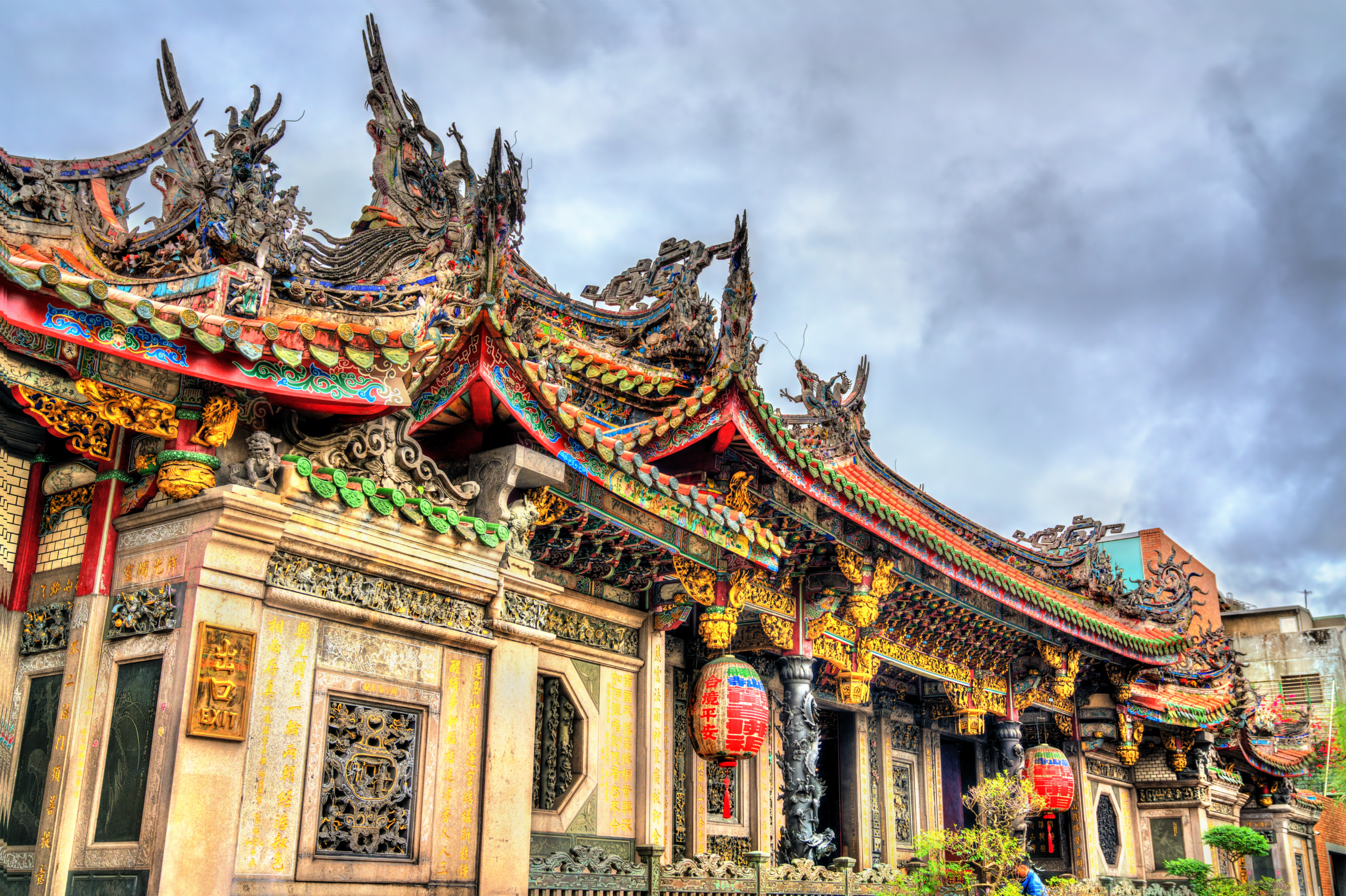
Beitou is the hot-spring district in Taipei’s northern foothills, where the Yangmingshan massif heats sulfurous water that has drawn bathers for over a century. The indigenous Ketagalan people called the area Patauw — “land of sorcery” — for its steaming valleys. During the Japanese colonial era, Beitou became Taiwan’s onsen heart: the Beitou Public Bathhouse opened in 1913, the largest hot-spring bath in East Asia at the time, now the red-brick Hot Spring Museum.
At the head of the district sits Thermal Valley — a high-walled depression where pale green-blue water bubbles at 80–100°C, steam rising off the surface. It was named one of the “twelve great sights of Taiwan” during the Japanese period. You don’t bathe here; you bathe in the ryokan-style spa hotels nearby, fed by the same source.
For the traveler who trains, Beitou is the recovery ritual: a private hot-spring soak after a hard day, the mineral water working the legs, 30 minutes from the city center by MRT. The Japanese understood this a hundred years ago. Taipei still does it better than anywhere else in non-mainland Asia.
The National Palace Museum.
This is the single most important cultural institution in Taiwan, and one of the most significant collections of Chinese art on earth. The National Palace Museum holds nearly 700,000 artifacts — the core of the imperial collection of the Forbidden City, transported out of mainland China as the Republic of China government retreated to Taiwan between 1948 and 1949. Three shipments left Nanjing for the harbor at Keelung. What arrived in Taipei is, in effect, the treasure of a thousand years of Chinese emperors.
The collection is so vast that only a fraction is on display at any one time, rotated through the galleries. The two pieces every visitor seeks — the Jadeite Cabbage and the Meat-Shaped Stone — are small, deceptively simple, and tell you everything about the Qing court’s obsession with craft. Go early, go private, and have a curator-led route.
Pair it the same afternoon with the Chiang Kai-shek Memorial Hall — completed in 1980, a white marble monument with an octagonal blue roof, set in a 25-hectare formal plaza. The hourly changing of the honor guard is the most precise piece of ceremony in the city. Together, museum and memorial give you modern Taiwan’s full argument in one afternoon: where it came from, and what it chose to keep.
Yangmingshan, on foot.
Most travelers don’t realize Taipei has a national park inside its city limits — and that it’s volcanic. Yangmingshan rises immediately north of the basin, a massif of hissing fumaroles, sulfur vents, grassy plateaus, and mountainsides that turn silver with plume grass in autumn. It is the only national park in Taiwan with both volcanic geography and hot springs.
The summit objective is Mount Qixing — Seven Star Mountain — at 1,120 meters, the highest point in Taipei City. The climb passes active fumaroles at Xiaoyoukeng, where steam roars out of the hillside and the air smells of sulfur. On a clear day the summit gives you the whole basin, Taipei 101 a toy in the middle of it, the coast beyond.
For the traveler who trains, this is the active anchor of the trip: a real summit push on graded trails, fumaroles and crater lakes en route, and a soak in the park’s own hot springs to close it out. Then back to the city in under an hour. Taipei is the rare capital where you can summit a volcano before lunch and sit at a three-star counter that night.
Shilin is the famous one. It’s not the one to do.
Shilin Night Market is the biggest and the most photographed, which means it’s also the most crowded, the most touristed, and the most diluted. Go to Raohe Street Night Market instead — older, tighter, anchored by the Ciyou Temple gate and the Michelin-recognized pepper-bun stall. We send you with a guide who orders the right ten things and skips the rest.
The observatory queue is the tourist version.
Paying to ride to the 89th-floor observation deck means an hour in line for a view through glass. The better move is a reservation at one of the tower’s upper-floor restaurants or the Xinyi rooftop bars — same altitude, a drink in hand, no queue. Or climb Elephant Mountain and see 101 in the frame instead of from inside it.
Skip the hop-on-hop-off circuits.
The double-decker city loops rush a hundred people past Taipei’s surfaces in two hours and teach you nothing. A private car with an English-fluent guide covers the same ground in a half-day — National Palace Museum, Beitou, the temples — and you actually understand the layers instead of photographing them from a moving deck.

Where you sleep matters.
Mandarin Oriental Taipei
Opened 2014. Taiwan’s defining luxury hotel. 303 rooms on Dunhua North Road in eastern Taipei — a 19-floor European-classical-revival building modeled on a Parisian grand hotel. The Bencotto Italian restaurant and the Mandarin Cake Shop (the most famous pineapple cakes in Taipei) are both destinations themselves.
Regent Taipei
Opened 1990 as Four Seasons by Regent — the property that established luxury hospitality in Taipei. Now operated by Regent Hotels. 478 rooms across two towers (Tai Pan + Tai Mei). The 20th-floor outdoor pool has the city’s signature panoramic view. The Bar 8 lobby lounge runs the largest single-malt whisky list in Asia (3,500+ labels).
Grand Hyatt Taipei
The Taipei 101 anchor hotel — 856 rooms in two towers directly opposite Taipei 101 in the Xinyi business district. The Premier Suite views frame Taipei 101 in the bedroom window. The full-service business hotel of choice for clients with corporate trips to Taipei.
W Taipei
Xinyi District, MRT accessible from inside the hotel. The party-luxury flagship — WET deck pool, Yen Cantonese, the city’s best-located design hotel for travelers who want energy and proximity to Taipei 101.
Kimpton Da An, Taipei
129 rooms in the walkable Da’an district, surrounded by the city’s best cafés and eateries. Awarded a Michelin Key in 2025. The intimate, residential alternative to the big towers — for travelers who want a neighborhood, not a lobby.
Palais de Chine Hotel
Datong, beside Taipei Main Station. Old-world European-Asian interiors, and home to Le Palais — Taipei’s three-Michelin-star Cantonese kitchen — on the 17th floor. Stay here and the hardest reservation in the city is an elevator ride away.

Stars to street.
The starred tier.
Le Palais
Taipei’s defining fine-dining room, on the 17th floor of the Palais de Chine Hotel. Chef Ken Chan’s refined Cantonese — the signature being the lacquered roast duck, served in courses. Three Michelin stars held since 2018. The benchmark three-star meal in Taiwan.
Taïrroir
Chef Kai Ho’s modern Taiwanese tasting menu — local terroir reworked through French technique, the name a play on “Taiwan” and “terroir.” Taipei’s second three-Michelin-star restaurant. The most creative high-end kitchen in the city. Booking weeks out, concierge-assisted.
L’Atelier de Joël Robuchon
The Taipei outpost of Robuchon’s global counter concept, in the Xinyi shopping complex by Taipei 101. The signature red-and-black open kitchen, the famous pommes purée, small-plate French precision. Two Michelin stars. The counter is the seat to request.
Three more, top to street.
logy
Chef Ryogo Tahara’s intimate Da’an tasting room — contemporary Asian cooking with Japanese precision and Taiwanese ingredients. Two Michelin stars. One of the city’s hardest counters to book and most often cited on best-of-Asia lists. Concierge-only at peak.
Yong Kang Beef Noodle
The benchmark Taiwanese beef noodle soup — fall-apart braised shin in a deep spiced broth, a Yongkang Street institution since 1963. A Michelin Bib Gourmand every year since the Taipei guide began. This is the bowl the city argues about.
Fuzhou Shizu Pepper Bun
The pepper-bun stall at the gate of Raohe Night Market — minced pork and scallion sealed in dough, baked charcoal-fired on the walls of a clay drum oven. A Michelin Bib Gourmand. The single best thing to eat at a Taipei night market, done right.
Want a chef in your suite?
For longer stays or special dietary protocols — recovery nutrition, performance macros, post-training meals — we arrange a private Taiwanese chef in your suite. Market run optional. Single dinners or three meals a day. Quietly handled.

How the city moves.
TPE → city center.
Taoyuan International (TPE). ~40km west of central Taipei · 40 min by private car, 35 min by Airport MRT. T1 is for older Asian carriers; T2 handles ANA, Cathay, EVA, China Airlines.
Private Transfer. Black Mercedes E-Class or V-Class. Meet and greet at the gate with a name card, bags handled, straight to your hotel in Da’an or Xinyi.
The same driver stays with you throughout your trip. Arranged through your hotel or directly through us. For ultra-tight schedules, the Airport MRT (NT$160) is the unsentimental fastest option.
Once you’re in.
Taipei MRT is the cleanest, most punctual metro in Asia. EasyCard tap-in. Even in luxury mode, the MRT is faster than a car for cross-city moves — Xinyi to Beitou is 35 min, traffic-free.
Private car and driver for evening dinners, Yangmingshan day trips, and airport runs. English-fluent driver, same one every day, on call.
Taipei Uber and Taxis are reliable and metered. Cabs are cheap. The yellow cabs accept EasyCard. Apps work everywhere.
What you’ll actually do in Taipei.

What you actually need.
Required vs. recommended.
What to pack before you fly.
How Taipei affects the body.

What we tell you that nobody else does.
Jun–Sep brings Pacific storm systems straight in.
Taiwan sits in the heart of the Western Pacific typhoon corridor. A direct hit can shut Taipei’s MRT, ground domestic flights to Kaohsiung, and close Yangmingshan for 24–72 hours. The August window in particular is volatile.
What we do about it: we default to Oct–April for Taipei trips. If Jun–Sep is non-negotiable, we monitor the Central Weather Bureau forecast 10 days out and build a flexible indoor Plan B — National Palace Museum, Le Palais, full hotel-spa days — so a storm day isn’t a wasted day.
It’s not the heat, it’s the moisture.
Taipei summers read 82–92°F on paper. The reality: 85%+ humidity stacks on top, and the city’s basin geography traps it. Walking from MRT to restaurant in July leaves you soaked. The AC-everywhere infrastructure is a survival response, not a preference.
The fix: early-morning Elephant Mountain windows for any climbing, mid-afternoon hotel-pool reset, evening dinners from 7pm. Always carry a small towel — locals do.
Swim attire required at the public pools.
Travelers expecting the Hakone or Beppu nude-bathing experience are surprised: Taiwanese hot springs require swim attire at the public mineral pools. Beitou’s Millennium and Longnaitang follow this rule. Only private suites at Villa 32 or Grand View allow textile-free soaks.
The plan: pack swimwear. Or book a private suite — which is what we default to for ultra-luxury clients regardless. The mineral water is sulphur-rich and stronger than most Japanese springs.
Taiwan’s status is the silent topic.
Taiwanese identity and the cross-strait relationship is a quietly held subject. Most locals will not initiate the conversation, and the right move is to follow their lead. Calling Taiwan “China” or “ROC” with strangers is read as ignorant at best, hostile at worst. Calling it “Taiwan” is always safe.
What we tell clients: if it doesn’t come up, don’t bring it up. If your host raises it, listen. The culture rewards quiet observation here.
The ways you fly.
What locals notice.

The bespoke details.
Services not on any booking site.
Doors before opening hours. After closing.
Doors the city keeps closed.
The fluent people behind every visit.
We don’t ship itineraries.
The other guides give you a day-by-day plan. We don’t. A bespoke trip starts with what’s true for you: your training schedule, your dietary protocols, your sleep window, the experience you’d fly for. You answer. We build.
What we ask before we build.
The questions that shape your trip more than any itinerary ever could.
The moments we build around.
Not a checklist — a list of the kinds of anchors that often appear in a TBT-built trip.
Tell us about you. We build the rhythm.
Sanctum members answer the 7 prompts above. We build the trip from there. Flights, hotels, drivers, restaurants, private chef, hot-spring soaks, Michelin reservations, all pre-arranged before you land. No template. No itinerary you didn’t ask for.
What Taipei taught me.
Most travelers undersell Taipei. They treat it as the Asian stopover, a layover between Tokyo and Hong Kong, and they miss the city entirely. The deeper read: Taipei holds the cheapest three-Michelin-star meal in Asia, one of the world’s safest streets to walk at 2am, and a hot-spring valley a 30-minute drive from a 508-meter tower. The contrast is the city’s signature, not its skyline.
The work of a guide to Taipei is to push past the postcard moves — Taipei 101, Din Tai Fung, Chiang Kai-shek Memorial — and toward the quieter ones: a Beitou bathhouse before dawn, a Yangmingshan trail in the volcanic mist, the National Palace Museum at the moment the day’s first imperial gallery opens. The reward is a city that rewards rhythm over speed.
What stays after a properly built Taipei trip is not a single image. It is the texture of a place that runs on courtesy — quiet on the MRT, queues that form themselves, service that is exact and warm at once. That register is rarer than any single restaurant or temple, and it is the part of Taipei worth carrying home.
Want Taipei handled?
Sanctum members can request a custom Taipei route — flights, hotels, drivers, Michelin reservations, private chef, Beitou hot-spring soaks, a Yangmingshan guide, region arc extension — pre-booked, the whole rhythm of the trip mapped before you land.
Taipei is the launch pad.
Within a half-day by high-speed rail, train, or short drive, you can reach 5 different versions of Taiwan — a harbor metropolis, a marble river gorge, a mountain-ringed lake, the old imperial capital, and a gold-rush mountain town. Each gets its own dedicated guide.
Enter your details to open this guide — and every guide in our atlas.
The trips we don’t list publicly
The full Taipei guide—our exact stays, tables, and routes—lives inside Sanctum.
Unlock the Guide