thebespoketraveler
Vietnam
Hà Giang LoopCity Guide Volume 01
CITY GUIDE · 2026

Hà Giang Loop.

350 kilometres along the Chinese border. The road they carved by hand.
MÃ PÍ LÈNG PASS · HÀ GIANG LOOP

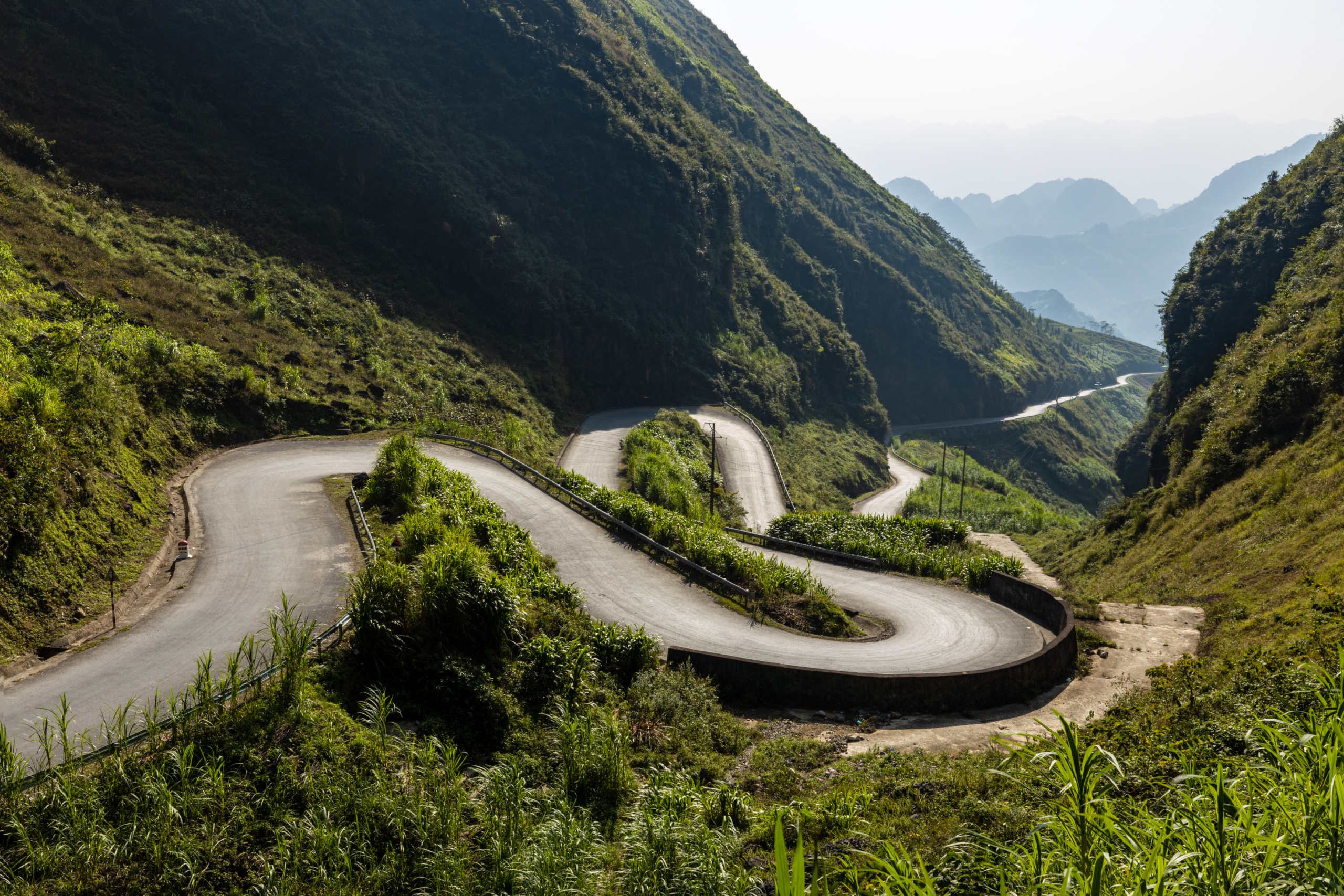
The Hà Giang Loop is Vietnam’s most spectacular road. 350 km of mountain switchbacks through the country’s northernmost province — Hà Giang shares a 270 km border with China’s Yunnan Province, and the loop runs the ridges along that border. UNESCO designated the Đồng Văn Karst Plateau Geopark a UNESCO Global Geopark in 2010 for the karst geology that lifts the loop above 1,000m for most of its length.

Top Gear and every motorbike-travel publication call this one of the best motorbike rides in the world.The Mã Pí Lèng Pass — 2,000m above the Nho Quế River — is the photograph.

The loop runs Hà Giang → Quản Bạ → Yên Minh → Đồng Văn → Mã Pí Lèng → Mèo Vạc → back to Hà Giang. Standard runs 3 days on a motorbike, ridden by your guide while you ride pillion (or solo if you have a license and the skill). For non-riders we arrange a private SUV with driver — you get the same loop in 4 days instead.

“The Hà Giang Loop is Vietnam’s wildest road. Top Gear is right about this one.”

Luxury infrastructure is intentionally limited. P’Apiu Resort outside Hà Giang City is the only 5-star property in the region — 9 ultra-private villas on a mountain ridge. Beyond that, the trip lives in boutique mountain lodges and ethnic-village homestays. This is a destination for the experience, not the polish.

Best window: September–November (rice harvest gold, clear ridge views) and March–May (buckwheat flowers, mild temperatures). Avoid June–August (rainy, landslide risk) and December–February (cold + foggy).

All that being said — welcome to the Hà Giang Loop. Let’s break it down.
— 01 —
WHAT YOU NEED TO KNOW

Before you arrive.

The brief.
VISA · US PASSPORT E-visa required. $25 single entry, 90-day validity. Apply 5–7 business days before travel at evisa.gov.vn. UK / EU / AU citizens use the same portal.
BEST WINDOW Late October — early April SWEET SPOTS:early November, late March AVOID:May — August
LANGUAGE Vietnamese · Northern accent. Vietnamese has two distinct accents — Northern (Hanoi) and Southern (Saigon). Google Translate defaults to Southern. We curate a custom phrase pack for the Northern accent on request.
CURRENCY $500,000 VND ≈ $20 USD. Cash is what you’ll use most. Locals transact via QR-code bank transfer — a system you can’t easily access without a Vietnamese account.
eSIM · DATA Roamless. A 3rd-party app — download from the App Store or Google Play, then load your own personal WiFi/hotspot by purchasing GB. For additional digital privacy, add ExpressVPN.
TAP WATER Don’t drink it. Bottled water only. Don’t drink the ice either — try to avoid it as much as possible. Ice at luxury restaurants is fine; ice from a street cart isn’t.
NIGHTS 3 minimum. 5 ideal. This is a city to slow down and immerse yourself — don’t rush it. Anything under 3 is a layover, not a trip.
CULTURAL CODE & HYGIENE Don’t wear all white. Don’t stand chopsticks vertically. Shoes off at any home or temple threshold. Hygiene runs lower than Western standards — pack sanitizer and baby wipes for your hands and any utensils you use. Full codes in §7.
MEDICAL & EMERGENCY Hanoi French Hospital. 1 Phương Mai Street, Đống Đa District. International-standard care, English-speaking specialists, 24/7. Tel: +84 24 3577 1100.

US Embassy Hanoi. 7 Láng Hạ Street, Ba Đình District. Tel: +84 24 3850 5000. Keep both on file.
MANNERISM Don’t take it personally. Outside luxury hotels and Michelin restaurants, A+ customer service isn’t a given — you may not be greeted on time or welcomed warmly. In crowds, people may bump you, step on your foot, not say excuse me. They’re not being rude; Vietnamese cities are dense and people are accustomed to filling spaces. Thank-yous and welcomes are sparse. Don’t be alarmed. Don’t feel offended. This is how the city moves — just keep moving with it.
— 02 —
THE EXPERIENCES

The road itself.

The Hà Giang Loop is a ~350km circuit through Vietnam’s northernmost province, climbing across the Đồng Văn Karst Plateau — a UNESCO Global Geopark of 400-to-500-million-year-old limestone — along the Chinese border. The experience isn’t a single sight. It’s the road. 4 anchors hold it together.

The loop runs Hà Giang City → Quản Bạ → Yên Minh → Đồng Văn → over the Mã Pí Lèng Pass → Mèo Vạc → back. It climbs above 1,000m for most of its length and crosses passes that stack switchback on switchback into the cloud. Between them: terraced corn cut into near-vertical slopes, stone-walled Hmong villages, weekly markets where 17 ethnic groups trade, and the turquoise Nho Quế River threading the deepest canyon in Southeast Asia far below.

You don’t come here for a resort. You come for the Mã Pí Lèng at golden hour, the boat into Tú Sản Canyon, the flag tower at the Chinese border, the Hmong King’s palace hidden in a valley of cypress. The reward of the loop isn’t comfort — it’s scale. It’s the road carved by hand into a karst plateau older than the dinosaurs, and the feeling of crossing it under your own momentum.

MÃ PÍ LÈNG · THE PASS
— 01 of 04 · IMMERSIVE —
THE PASS

Mã Pí Lèng Pass.

the climax of the loop. The road above the Nho Quế.

The Mã Pí Lèng Pass is the photograph the whole loop is built toward. The road crests near 1,500m on the rim of the Đồng Văn Karst Plateau, then runs a cliff-edge ribbon between Đồng Văn and Mèo Vạc with the turquoise Nho Quế River coiling roughly 800m straight below. The name, in Hmong, is often translated “horse’s nose bridge” — the climb so steep horses were said to need rest at the top.

The road was cut by hand. Beginning in 1959, thousands of young volunteers from sixteen ethnic groups carved the “Happiness Road” across the plateau over several years, some lowered on ropes to chip the cliff face by hammer. What you ride today is one of the great feats of mountain road-building in Asia.

You stop at the lookouts near the crest, where the plateau falls away into the Tú Sản gorge. Golden hour is the move — the late sun fills the canyon and the karst ridges stack blue into the distance. This is the view that defines northern Vietnam.

HOW TO DO IT
WHEN
the light makes the pass: early morningmist in the gorge, the road empty middayclearest views into the canyon golden hourthe sun fills the gorge — the photograph after raincloud pours over the ridges
WHERE
Between Đồng Văn and Mèo Vạc · lookouts at the crest
BRING
warm layers (exposed and windy), camera, a head for heights.
NOTE · THE HAPPINESS ROAD The highway across the plateau is officially the Đường Hạnh Phúc — the “Happiness Road” — built largely by hand from 1959 to 1965 to connect Hà Giang’s isolated highland districts. The Mã Pí Lèng section was the hardest and most dangerous stretch. A small memorial station near the crest marks the workers who built it.
— 02 of 04 · IMMERSIVE —
THE RIVER

The Nho Quế boat.

into the deepest canyon in Southeast Asia, on emerald water.

From the rim at Mã Pí Lèng you look down at it; on the boat, you ride through it. The Nho Quế River runs an impossible shade of jade-green through the Tú Sản Canyon — cliffs rising over 700m on both sides, the gorge widely cited as the deepest canyon in Southeast Asia. From the road it’s a thread far below. On the water, it’s a cathedral of rock.

You descend a steep switchback road to the small jetty, then take a boat upriver into the gorge — a quiet 30-to-60-minute run where the cliffs close in and the road, the crowds, and the rest of the loop disappear entirely. For travelers who’ve spent days on switchbacks, the stillness of the river is the counterweight the whole trip needs.

The light is best late morning to early afternoon, when the sun reaches the bottom of the gorge and lights the water to full emerald. We arrange a private boat rather than the shared longtails, timed to miss the day-trip surge.

HOW TO DO IT
WHEN
Late morning to early afternoon for the green water. ~30–60 min on the river.
WHERE
Jetty below Mã Pí Lèng · descend via the switchback access road.
BRING
Sun protection, light layer for the wind off the water.
WE ARRANGE
A private boat, timing to dodge the crowds, the steep transfer down to the jetty.
PRIVATE BOAT · OFF-PEAK A private Nho Quế boat charter timed for the empty hours — no shared seating, no waiting line at the jetty. Arranged for Sanctum members.
NHO QUẾ · TÚ SẢN CANYON
HMONG KING’S PALACE · 1919–28
— 03 of 04 · CULTURAL AND HERITAGE —
THE HERITAGE

Palace, flag tower, plateau.

the human history of the Đồng Văn Karst Plateau.

The loop isn’t only landscape. The plateau is home to 17 ethnic groups, and three sites pull their history into focus — best strung together on the Đồng Văn–Lũng Cú stretch.

Start at the Hmong King’s Palace (the Vương family mansion) in the Sà Phìn valley. Built between roughly 1919 and 1928 for Vương Chính Đức, the Hmong opium-trade chieftain the French recognized as a regional king, it’s a fortified compound of dark hardwood, stone, and Chinese-influenced courtyards ringed by old cypress. Declared a national monument in 1993, it’s the most significant building on the plateau.

Drive north to Lũng Cú Flag Tower — the symbolic northernmost point of Vietnam, a tower flying a 54-square-meter flag (one square meter for each of the country’s ethnic groups) on a hill overlooking the Chinese border. The 360° view from the top is the reward for the climb.

End in Lô Lô Chải, the clay-house village of the Lô Lô people at the foot of the flag tower — named among the world’s best tourism villages in 2025 — or wander the lamplit stone streets of Đồng Văn Old Quarter, a century-old highland market town, in the evening.

HOW TO DO IT
WHEN
A full day on the northern arm. Palace mid-morning, flag tower midday, village at dusk.
ROUTE
Hmong King’s Palace (Sà Phìn) → Lũng Cú Flag Tower → Lô Lô Chải → Đồng Văn Old Quarter.
ENTRY
Small entry fees at the palace and flag tower; cash only.
— 04 of 04 · THRILL-SEEKING —
THE RIDE

Riding the loop.

the road every motorbike publication calls one of the best on earth.

The Hà Giang Loop is, first and last, a riding road — a ~350km circuit of switchbacks, passes, and cliff-edge straights that consistently lands on “best motorbike rides in the world” lists. The reason is the terrain: you climb and drop through karst all day, with the road clinging to slopes that would be impossible anywhere with softer rock.

There are two honest ways to do it. Ride pillion with an “easy rider” — a vetted local driver who knows every blind corner and weather pattern, while you take in the view and the photos. Or, if you genuinely have the license and the skill, ride solo on a properly maintained bike. We don’t put novices on these passes; the drops are real and the road has no margin for error.

Non-riders aren’t shut out. A private SUV with a driver covers the same loop in four days, stopping at every viewpoint, palace, and market — all the landscape, none of the saddle time. Many of our clients split the difference: ride the dramatic stretches, drive the long transfers.

HOW TO DO IT
WHEN
Sep–Nov (harvest gold) or Mar–May (mild, buckwheat). Avoid Jun–Aug rain.
WHERE
The full circuit from Hà Giang City · 3 days riding / 4 days by SUV.
LEVELS
Pillion with an easy-rider · solo (license + skill required) · private SUV for non-riders.
BRING
Warm and waterproof layers, gloves, your motorcycle license if riding solo.
WE ARRANGE
Vetted riders or driver, maintained bikes, full gear, daily lodging, support vehicle.
THE LOOP · ~350KM
THE LOOP · ~350KM
A WORD ON · THE PARTY-BUS LOOP

Skip the giant party convoys.

The loop has a backpacker-hostel scene that runs it as a 20-bike party convoy, beer stops included. It’s loud, rushed, and exactly the opposite of why you’d come. Go private — your own rider or SUV, your own pace, the viewpoints when they’re empty. The plateau deserves more than a pub crawl on wheels.

A WORD ON · SELF-DRIVING UNTRAINED

Don’t ride solo if you can’t ride.

Tourists rent bikes with no experience and crash on these passes every season — the drops are sheer and the road is unforgiving. If you don’t genuinely ride, take a vetted easy-rider or a private SUV. The view is identical from the back seat, and you’ll actually be alive to remember it.

A WORD ON · THE ONE-NIGHT DASH

Don’t compress it into a day or two.

Some operators sell a frantic loop that skips the boat, the palace, and half the plateau to “save time.” The loop rewards a true 3–4 days. Rush it and you’ll have ridden a lot of switchbacks to see almost none of what makes Hà Giang extraordinary.

— 03 —
WHERE YOU REST YOUR HEAD

Where you sleep matters.

Each earns its place differently — heritage, height, character.
01 · the anchor
CURATOR’S PICK · THE ONLY 5-STAR

P’apiu Resort

— five hand-built villas, up to 12 guests, on a private mountain.

The single ultra-luxury property in the region, in the Bắc Mê district roughly 300km from Hà Nội. Five unique villas on a 30-hectare private mountain, hosting only up to 12 guests at a time — built by hand over seven years and staffed entirely by local Tày, Dao, and H’Mông artisans. Named Asia’s leading romantic and unique-architecture resort.

INSIDER ACCESS
  • Private villa with open-air mountain bath and in-villa gourmet dining
  • 30 hectares of conserved forest + secret trails, fully private
  • Vietnam’s longest hand-painted ethnic path — 1.7km
  • Curated wellness therapies + village visits with local hosts
  • Travelife Gold certified · zero single-use plastic
02 · the loop base
ON THE LOOP · QUẢN BẠ

H’Mong Village Resort

— the most polished stay on the loop itself.

The best-appointed property actually on the loop, near Quản Bạ on the first day’s drive out of Hà Giang City. 25 bungalows shaped like the woven baskets of the local H’Mông, scattered across a hillside with an infinity pool framing the valley below. The comfortable base for the loop without leaving it.

INSIDER ACCESS
  • Hillside basket-bungalow with valley views from the bed
  • Infinity pool over the Quản Bạ valley
  • Spa, two restaurants, 24-hour room service
  • An easy, scenic first night before the high passes
  • Bikes on site for valley exploring
03 · the village night
LÔ LÔ CHẢI · ĐỒNG VĂN

A Lô Lô Chải homestay

— the most authentic night, at the foot of the flag tower.

For the night that matters most — at the northern tip of the loop — we place clients in a boutique clay-house homestay in Lô Lô Chải, the Lô Lô village beneath Lũng Cú Flag Tower named among the world’s best tourism villages in 2025. Restored stilt and clay homes, hearth fires, and a sky full of stars at the country’s edge.

INSIDER ACCESS
  • Restored clay or stilt home, privately for your party
  • Walking distance to Lũng Cú Flag Tower at dawn
  • Home-cooked Lô Lô dinner by the hearth
  • Đồng Văn Old Quarter’s lamplit stone streets nearby
  • The most genuine sleep on the entire plateau
— A HONEST WORD ON STAYS — Outside P’apiu, this is a region of boutique lodges and ethnic-village homestays, not five-star hotels. Choose for location on the loop and the night’s experience, not the brand.
FOR THE SPLURGE NIGHT

Bookend with P’apiu

P’apiu sits off the loop near Bắc Mê — best used as a one- or two-night decompression at the start or end, not a nightly base. The loop itself sleeps in lodges and homestays.

FOR THE LOOP NIGHTS

Sleep where the day ends

The loop is a moving trip — you sleep in Yên Minh, Đồng Văn, or Mèo Vạc depending on the day’s ride. We pick the best boutique lodge for each stop rather than backtracking to one base.

FOR THE PURIST

Take the homestay

A night in a vetted Hmong, Tày, or Lô Lô home — hearth-cooked dinner, rice wine, the family’s stories — is the experience the loop is really about. Comfortable, clean, and unforgettable.

— 04 —
WHERE TO EAT

The lodge and the highland.

There are no Michelin stars on the loop — the food is highland, ethnic, and honest. You eat at your lodge, in a homestay, or at a roadside market town. Six things worth the table.
THE TABLES

Where you’ll actually eat.

— lodge kitchens, homestay hearths, and the one proper restaurant in town.
RESORT DINING · P’APIU

P’apiu in-villa dining

ORDER: the gourmet set, served in your villa

The closest thing to fine dining in the province — gourmet meals prepared and served privately in your villa at P’apiu, drawing on local highland produce and the kitchen’s refined hand. If you bookend the loop here, this is the meal of the trip.

— P’apiu Resort · Bắc Mê district
HOMESTAY HEARTH

The homestay dinner

ORDER: whatever the family cooks that night

The defining meal of the loop. In a Hmong, Tày, or Lô Lô home, dinner comes off the hearth: grilled mountain pork, foraged greens, mèn mén (steamed corn meal), sticky rice, and corn or rice wine poured generously. Communal, warm, and entirely real.

— vetted homestays along the loop
HÀ GIANG CITY · DEPENDABLE

Rainbow Ha Giang Restaurant

ORDER: the family set + spring rolls

A reliable, clean, well-run family restaurant in Hà Giang City — the dependable first or last meal of the trip. Vietnamese home cooking done well: fresh spring rolls, bánh xèo, phở, and rice plates. Where you fuel up before the passes or recover after.

— Hà Giang City center
THE HIGHLAND PLATE

What the plateau eats.

— the Hà Giang specialties worth seeking out, wherever you find them.
THẮNG CỐ · MARKET STEW

Thắng cố

ORDER: a bowl at a weekly market

The signature Hmong dish of the plateau — a deep, long-simmered stew of meat, offal, and mountain herbs, traditionally cooked in giant pots at the weekly markets of Đồng Văn and Mèo Vạc. Earthy and intense; the most authentic thing you can eat up here, often with a cup of corn wine.

— Đồng Văn + Mèo Vạc markets
CHÁO ẤU TẨU · NIGHT PORRIDGE

Au Tau bitter porridge

ORDER: a hot bowl in the evening

A Hà Giang specialty — porridge made from the ấu tẩu tuber, simmered for hours with rice and pork until its bitterness mellows into something warming and restorative. Traditionally eaten at night to ward off the highland cold. Unique to this region.

— Hà Giang City evening eateries
XÔI NGŨ SẮC · FIVE-COLOR RICE

Five-color sticky rice

ORDER: the full five-color plate

Glutinous rice dyed five natural colors with forest leaves, roots, and turmeric — a festive dish of the northern highlands, served at markets and celebrations. As much a cultural object as a meal: each color carries meaning to the ethnic families who make it.

— markets + homestays across the plateau
— PRIVATE CHEF · ARRANGED ON REQUEST —

Want a chef at your lodge?

For longer stays at P’apiu or a private homestay buyout — or special dietary protocols like recovery nutrition and performance macros — we arrange a private cook sourcing from local markets and highland gardens. Single dinners or every meal. Quietly handled.

REQUEST A CHEF
— 05 —
CLIMATE · TRANSPORT · TIMING

How the loop moves.

Climate by month, the route in from Hanoi, getting around the karst plateau, and the rhythm of the Hà Giang loop.
CLIMATE BY MONTH — HÀ GIANG · °F (°C) · 1,000–2,000m ELEVATION
JAN
43–59°
6–15°C
25mm
FEB
46–63°
8–17°C
40mm
MAR
54–70°
12–21°C
60mm
APR
61–77°
16–25°C
110mm
MAY
66–82°
19–28°C
200mm
JUN
70–84°
21–29°C
320mm
JUL
72–86°
22–30°C
380mm
AUG
70–84°
21–29°C
400mm
SEP
66–81°
19–27°C
240mm
OCT
61–75°
16–24°C
140mm
NOV
54–68°
12–20°C
60mm
DEC
46–61°
8–16°C
25mm
RECOMMENDED Sep–Nov (rice harvest gold) · Mar–May (buckwheat flowers) AVOID Jun–Aug (rain + landslide) · Dec–Feb (cold + foggy passes)
The passes — Mã Pí Lèng above all — stay cold and foggy through winter. Dec–Feb daytime highs at 2,000m drop into the 40s°F with limited visibility. Sep–Nov is the photographer’s window.
ACCESS · PRIVATE CAR + HELICOPTER OPTION

HAN → Hà Giang.

No commercial airport in Hà Giang. The standard route is 7 hours by private car from Hanoi. The premium move: helicopter charter from Hanoi direct to P’Apiu Resort’s private helipad (~70 min) — the only luxury property in Vietnam’s far north with a licensed pad.

Private SUV. Toyota Land Cruiser or Fortuner with a driver who runs this corridor. Built-in stops at Cao Bằng or Thái Nguyên for the long version, direct for the express.

For non-riders, the private SUV stays with you through the entire loop. For motorbike clients, the SUV runs as the follow-vehicle.

RIDING THE LOOP

Motorbike or private SUV.

Motorbike (350km / 3–4 days). Honda XR150 or BMW G310 with a certified guide and a follow-vehicle. We only place experienced riders on the loop — Mã Pí Lèng is unforgiving.

Private SUV alternative. Same route, same anchors, same stops — without the bike. For non-riders this is the recommended path. The views are unchanged.

No Grab. No taxis on the loop. The team handles every kilometer.

THE DAILY RHYTHM

What you’ll actually do on the loop.

6:00–7:00am
Wake. Coffee on the lodge balcony. Morning fog still on the ridges — it lifts by mid-morning.
7:00–9:00am
Breakfast + safety brief. At the lodge or in town. Daily route review with the guide — weather, road conditions, where the photo windows fall.
9:00–11:30am
Morning ride. Fog clearing on the karst as you climb. Quản Bạ heaven gate, the road to Yên Minh.
11:30am–12:30pm
Mã Pí Lèng Pass. The most dramatic mountain pass in Southeast Asia. Stop for photos, stay 30 minutes, never just drive through.
12:30–2:00pm
Lunch. Local restaurant in Đồng Văn or Mèo Vạc — fire-pit pork, sticky rice, foraged greens.
2:00–4:00pm
UNESCO karst plateau. Đồng Văn Karst Geopark — limestone formations 600 million years old. Hmong villages threaded through the rocks.
4:00–5:30pm
Tu San Canyon boat. Nho Quế River boat ride through the deepest canyon in Vietnam. The valley walls are 800m of vertical limestone.
5:30–6:30pm
Sunset. Mã Pí Lèng or Lung Cu Flag Tower (Vietnam’s northernmost point). The light hits the karst.
7:00–9:00pm
Mountain village dinner. Multi-course traditional at the lodge or in a Hmong home — rice wine, fire-warmed, slow.
9:00–10:00pm
Sleep. Cold mountain air, total silence. Up again before the fog lifts.
— 06 —
VACCINATIONS · HEALTH · KIT

What you actually need.

Required vs. recommended. What to pack for a multi-day mountain loop.
VACCINATIONS

Required vs. recommended.

REQUIRED · DIRECT US ENTRYNone. US passport holders need the Vietnam e-visa ($25 · 90-day single or multiple-entry) — we file it for you.
RECOMMENDEDRoutine boosters (MMR, Tdap, flu). Hepatitis A + Typhoid for all travelers. Japanese Encephalitis recommended for any extended rural Vietnam stay — the Hà Giang loop qualifies. Rabies pre-exposure series worth discussing for motorbike riders given limited evac options on the loop.
OVERBLOWNYellow Fever — only required if transiting through endemic countries.
PRE-TRIPTravel-medicine clinic 4–6 weeks pre-departure. Prescription kit: antibiotics, anti-emetics, traveler’s diarrhea protocol — pharmacies on the loop are sparse and limited.
THE ESSENTIALS

What to pack before you fly.

RIDING GEARFull-face helmet, armored jacket, gloves, riding pants — bring your own or we source. The local rental gear is not adequate for the loop.
LAYERED MOUNTAIN WEAREven May–Sept on the passes drops to 55°F. Dec–Feb hits 40°F with fog. Pack a packable down, fleece, merino base, waterproof shell.
ROAMLESS eSIMLoop signal is patchy — passes drop entirely. Roamless switches between available carriers automatically; the only eSIM that holds up on the karst plateau.
EXPRESSVPNPre-installed and tested before you fly. Vietnam restricts certain services; ExpressVPN keeps everything seamless and your data encrypted on lodge Wi-Fi.
FOR THE TRAVELER WHO TRAINS

How the loop affects the body.

SLEEP · JET LAGUTC+7 — 12 hours from NYC, 7 from London. We recommend 1–2 nights in Hanoi to fully reset before the long drive in. Loop days are physically demanding — bank the rest first.
ALTITUDE · 1,000–2,000MThe passes hit 2,000m. Not high enough for AMS, but enough that an unconditioned rider will feel the long days more than expected. Hydrate heavier; expect lower aerobic ceiling for the first 24 hours.
RIDING FATIGUE4–6 hours/day on a bike with 40+ switchbacks per stretch. Forearms, lower back, neck. We build rest stops every 90 minutes, plus a mid-loop full rest day at P’Apiu.
RECOVERYP’Apiu has a spa with mineral pools and traditional Vietnamese herbal treatment. Other lodges run hot showers and herbal soaks. We pre-stage compression boots and a kettlebell at the rest-day lodge on request.
— 07 —
THE HARD TRUTHS

What we tell you that nobody else does.

The realities of the Hà Giang loop that shape how the trip actually feels. Honest framing first; everything else after.
PRIORITY · 01 THE LOOP IS NOT FOR CASUAL RIDERS

This is real motorbike terrain.

Mã Pí Lèng Pass is a 2,000m cliffside road with sheer drops, blind corners, and weather that turns on you. Vietnamese motorbike fatalities run high on this loop every year — almost all of them undertrained riders on rented bikes. If you’ve ridden less than 1,000 lifetime hours on a motorcycle, do not ride this loop.

The alternative: private SUV with a driver who runs this route weekly. Same loop, same anchors, same views. You see everything. The SUV is the recommended path for any non-rider.

PRIORITY · 02 ONE LUXURY PROPERTY · P’APIU

There is one 5-star on the loop.

P’Apiu Resort is the only true luxury property in Hà Giang province — Relais & Châteaux, private helipad, 33 villas. Everything else on the loop is boutique mountain lodge or eco-lodge. Yen Minh Eco and Dong Van Mountain are good; they are not Four Seasons.

The fix: we open and close the loop at P’Apiu for the luxury anchors, then route through the boutique lodges in the middle so you see the real plateau. The contrast is the point.

WEATHER CHANGES FAST ON THE RIDGES

The passes make their own weather.

Mã Pí Lèng and the upper passes routinely shift from sun to dense fog in 20 minutes. Visibility can drop to 10m. Mid-summer brings sudden landslides; winter brings ice on the switchbacks.

The plan: our guides ride this corridor weekly and read the sky. Buffer days built into every itinerary so we can reroute or wait out a system without breaking the loop.

ALTITUDE ABOVE 2,000M

Not Everest, but real enough.

Mã Pí Lèng tops out near 2,000m. Most travelers feel nothing. A subset will get headache, shortness of breath, sleep disruption — particularly day 1 if you went straight from sea level to the pass.

The fix: we build in a Hà Giang City overnight (1,000m) before climbing to Đồng Văn (1,500m), then peak at Mã Pí Lèng. Stepped acclimatization, no shortcuts.

PRIVATE · HELICOPTER · COMMERCIAL

The ways you fly.

PRIVATE JET ARRIVALHanoi (HAN) has a business aviation terminal. From the FBO, our team links you to the helicopter charter or the private SUV for the run north.
HELICOPTER CHARTER · P’APIU HELIPADP’Apiu Resort runs a licensed private helipad — the only luxury property in Vietnam’s far north with one. ~70-minute flight from Hanoi. 4–6 passengers. This is how the helicopter clients arrive.
COMMERCIAL · DOMESTICVietnam Airlines is the full-service standard for any in-country leg. SkyTeam alliance, business lounges, reliable schedules.
AVOID VIETJETBy all means necessary. Do not book. Refuse to book.
COMMERCIAL · INTERNATIONALEmirates and Qatar for the long-haul into HAN. Multiple weekly routes, strong connections to the rest of Southeast Asia.
THE LOCAL CODE

What locals notice on the plateau.

DON’T WEAR ALL WHITEIn Vietnamese culture, all-white attire — especially white headbands — is associated with mourning and funerals. In a Hmong or Tày village, it reads even louder. Mixed colors, jewel tones, muted neutrals are the move. Verified.
ASK BEFORE PHOTOGRAPHING AT MARKETSThe Sunday Hmong markets at Đồng Văn, Mèo Vạc, and Lung Phin are not photo sets. Elders especially — ask first, smile, accept a refusal. A small gift afterward (cigarettes, candy for children) is appropriate.
SHOES OFF AT HOME THRESHOLDSAlways entering a Hmong or Tày home. The threshold is treated as sacred. Carry slip-on shoes.
ACCEPT THE CORN WINEThe Hmong distill rượu ngô (corn wine) and offer it at meals and ceremonies. Refusing the first cup reads as a hard no on the whole exchange. Take the cup; the gesture matters more than the volume.
DON’T STAND CHOPSTICKS VERTICALLY IN A RICE BOWLThis mimics incense at a funeral altar. Lay chopsticks flat across the bowl or on the chopstick rest. Verified across Vietnamese culture.
— 08 —
WHAT WE DO BEHIND THE SCENES

The bespoke details.

Kinds of arrangements made before you land.
— 01 —
WE ARRANGE

Services not on any booking site.

Quiet logistics, set before you arrive.
  • CERTIFIED MOTORBIKE GUIDEVietnamese guide with 5+ years on the loop. Lead rider + tail rider for groups, follow-SUV for luggage and recovery.
  • PRIVATE SUV ALTERNATIVEToyota Land Cruiser or Fortuner with a driver who runs the loop weekly. Same route, no bike.
  • HELICOPTER CHARTERHanoi → P’Apiu helipad. 70 minutes vs. 7 hours by road. Skip the access day entirely.
  • SAFETY KITQuality helmets, armored jackets, gloves. First-aid kit and satellite communicator stocked in the follow-SUV.
  • VISA + ENTRYVietnam e-visa ($25 · 90-day) filed for you. Roamless eSIM and ExpressVPN pre-configured.
— 02 —
WE OPEN

Doors that aren’t on any aggregator.

Private access to the loop and the villages.
  • SUNDAY HMONG MARKETSPrivate cultural guide for Đồng Văn, Mèo Vạc, or Lung Phin markets — translation, introductions, the back-of-the-stall conversations.
  • TU SAN CANYON · NHO QUẾ RIVER BOATPrivate boat through the deepest canyon in Vietnam. 800m limestone walls, no other boats on a private window.
  • LUNG CU FLAGPOLEVietnam’s northernmost point. Private access with a cultural brief on the border, the Hmong, and Vietnam-China relations.
— 03 —
WE ACCESS

Doors the loop keeps closed.

Relationships built ridge by ridge.
  • P’APIU GMDirect intro at check-in — pool villa held, mountain briefing waiting.
  • CERTIFIED MOTORBIKE GUIDE + FOLLOW-VEHICLEVetted lead rider, tail rider, support SUV — the only safe way to ride the loop.
  • HELICOPTER CHARTER · HANOI → HÀ GIANGPre-arranged through the licensed operator that lands at P’Apiu — skip the 7-hour drive.
  • LODGE UPGRADESQuietly arranged before arrival — the best-positioned room or villa at each stop.
— 04 —
WE TRANSLATE

The fluent people behind every visit.

English-speaking guides, on the loop, on your terms.
  • PRIVATE GUIDESHmong and Tày cultural guides — they live here, they translate the place, not a script.
  • RIDE LEADERSEnglish-fluent certified motorbike guide + tail rider.
  • FIXERSMedical evac protocol (helicopter to Hanoi if needed), pass-closure rerouting, last-minute lodge changes.
  • CULTURAL BRIEFSSent ahead of arrival — Hmong etiquette, market etiquette, what to wear and when.
— 09 —
THE SHAPE OF A HÀ GIANG TRIP

We don’t ship itineraries.

Bespoke means we build the rhythm around you, not the other way around. Here’s what we ask before we start.
HOW BESPOKE ACTUALLY WORKS

The other guides give you a day-by-day plan. We don’t. A bespoke trip starts with what’s true for you: your training schedule, your dietary protocols, your sleep window, the experience you’d fly for. You answer. We build.

— THE INPUTS —

What we ask before we build.

The questions that shape your trip more than any itinerary ever could.

  • 01.
    What time do you wake at home? Do you want to keep that here, or use the jet lag to shift earlier?
  • 02.
    Are you training during the trip? If so — what’s the schedule, what equipment do you need, and what climate adjustments matter?
  • 03.
    Any dietary protocol — macros, recovery nutrition, fasting window, allergens, religious or cultural restrictions?
  • 04.
    The one experience you’d fly for. Is it a meal, a place, a person, a quiet morning, something we haven’t mentioned?
  • 05.
    Density or quiet? Do you want a full city day, or the slow afternoon and the long lunch?
  • 06.
    Anniversary, milestone, recovery trip, work trip — what’s this trip for?
  • 07.
    Solo, couple, family, or group? Each shape differently.
— THE ANCHORS —

The moments we build around.

Not a checklist — a list of the kinds of anchors that often appear in a TBT-built trip.

  • The Mã Pí Lèng at golden hourThe single most Hà Giang-specific moment. The cliff-edge road, the Nho Quế far below, the gorge filling with late light. The whole loop builds to it.
  • The Nho Quế boatA private boat into Tú Sản Canyon — the still emerald counterweight to days of switchbacks. The loop’s quietest hour.
  • The heritage dayHmong King’s Palace → Lũng Cú Flag Tower → Lô Lô Chải. The human history of the plateau, strung along its northern arm.
  • The homestay nightA hearth-cooked dinner in a Hmong, Tày, or Lô Lô home — the rice wine, the stories, the experience the loop is really about.
  • The Region Arc launchOne of the 5 routes onward — Cao Bằng, Ba Bể, Đồng Văn, Sapa, or back to Hà Nội. Built into the trip if it fits.
— SANCTUM —

Tell us about you. We build the rhythm.

Sanctum members answer the 7 prompts above. We build the trip from there. Private transfer from Hà Nội, vetted riders or a private SUV, the lodges and homestays each night, the Nho Quế boat, the heritage day — all pre-arranged before you arrive. No template. No itinerary you didn’t ask for.

REQUEST A SANCTUM ROUTE

What the loop taught me.

The Loop runs Hà Nội out through Vĩnh Yên, Tuyên Quang and Hà Giang City before it climbs into the karst. 320 kilometres of highway before the first real mountain view at Heaven Gate Pass above Quản Bạ — the twin karst peaks of Núi Đôi pushing up out of the valley floor on the road north. The first day is the grind. The reward is what’s waiting at 1,000 metres.

Day two is the soul of it. Out of Quản Bạ at sunrise, up the Tham Mã S-curves to Yên Minh — five kilometres of switchbacks climbing to 1,500 metres, the road writing itself across the mountainside. Then the long descent into the Đông Văn Karst Plateau Geopark, UNESCO Global Geopark since 2010, the country’s first. Stilt-house villages at Du Già. Rice terraces hanging on slopes that have been farmed by H’Mông, Tày, Lô Lô and Dao communities for centuries. The road keeps climbing.

The Mã Pí Lèng Pass is the section that built the Loop’s reputation. The ridge cuts at 1,600 metres above the Nho Quế River — a 25-kilometre cliff road carved by hand between 1959 and 1965, the workers strung from ropes with picks. Below it, the Tu Sản Canyon falls a vertical thousand metres into emerald water. Top Gear and every motorbike publication that’s been here calls it one of the greatest passes on earth. The boat from Tà Làng Wharf runs the gorge for forty-five minutes; the river marks the Chinese border on the far wall.

Day three is Đồng Văn. The road north to Lũng Cú Flag Tower — the northernmost point of Vietnam, 839 stone steps to the 54-square-metre flag at the top, one square metre for each of the country’s recognised ethnic groups. A kilometre away is Lô Lô Chải, a village of one of Vietnam’s smallest ethnic minorities, still living in earthen-walled houses with yin-yang tiled roofs. Back south, the Vương Family Mansion at Sà Phìn — the H’Mông king’s palace, a nineteenth-century opium-trade fortress that fuses French colonial, Chinese, and H’Mông architecture in one courtyard. The Đồng Văn Old Quarter at dusk is 100-year-old stone houses on a narrow main street, lit by single bulbs, no neon. On Sundays the Mèo Vạc market opens — ethnic minorities walk down from the surrounding mountains to trade textiles, livestock, and corn wine.

Day four is the return. 350 kilometres south through Yên Minh and Hà Giang City and back to the highway. The bike is louder than the road. The Loop doesn’t close where it started — that’s the geometry of it. You ride out of the karst with a different idea of what Vietnam looks like.

Three nights on the route: H’Mong Village Resort at Quản Bạ for the infinity pool that opens onto the stone forest; Lâm Tùng Hotel by Bay Luxury in Đồng Văn town centre for the night after Mã Pí Lèng; an Auberge De Homestay in a restored century-old H’Mông farmhouse for the last night, clay walls and courtyard. Four Points by Sheraton in Hà Giang City is the backup luxury hold before or after, depending on flight times into Nội Bài.

— Kafele
SANCTUM

Want the Hà Giang Loop handled?

the wildest road, done right.

Sanctum members can request a custom Hà Giang route — private transfer from Hà Nội, vetted easy-riders or a private SUV, the lodges and homestays for each night, the Nho Quế boat, the heritage day, a private chef — pre-booked, the whole rhythm of the loop mapped before you arrive.

REQUEST A ROUTE
— FROM HÀ GIANG · 5 ROUTES ACROSS THE FAR NORTH —

Hà Giang is the launch pad.

The far north of Vietnam doesn’t end with the loop. From here you can extend deeper into the karst frontier — waterfalls on the Chinese border, a mountain lake, the geopark’s old town — or run south to Sapa and the gateway city. Each gets its own dedicated guide.

— 01 —
Cao Bằng / Bản Giốc
6 HRS · EAST
The border waterfall. Bản Giốc tumbles into a river marking the China line — Southeast Asia’s largest.
— 02 —
Ba Bể Lake
5 HRS · SE
The largest natural mountain lake in Vietnam. Dugout boats, limestone caves, quiet Tày villages.
— 03 —
Đồng Văn
ON THE LOOP · N
The geopark’s old market town — lamplit stone streets, the plateau’s beating heart. Stay the night.
— 04 —
Sapa
6 HRS · WEST
Rice terraces, Fansipan, real luxury infrastructure. The polished counterpoint to the wild loop.
— 05 —
Hà Nội
6–7 HRS · SOUTH
The gateway. Where the loop begins and ends — and the launch pad for everywhere else.
thebespoketraveler · Hà Giang Loop · City Guide template v7
The Bespoke Atlas

Unlock the city guide

Enter your details to open this guide — and every guide in our atlas.

WELCOME BACK