thebespoketraveler
Japan
OsakaCity Guide Volume 01
CITY GUIDE · 2026

Osaka.

Eat yourself bankrupt. The merchant capital, still cooking.
DOTONBORI · OSAKA

Osaka is the food capital of Japan. It earned that title centuries before Tokyo became Japan’s eastern capital. Osaka was the merchant city — the kitchen of the country — when Kyoto was still the imperial court. The locals coined the phrase kuidaore (“eat yourself bankrupt”) to describe what happens here. They meant it as a warning. We take it as the operating mode.

81 Michelin-starred restaurants. 59 Bib Gourmands. The world’s only takoyaki festival.A city that built its identity on hospitality measured by what’s on the plate.

What every first-time visitor underestimates is the contrast. Tokyo runs on precision. Kyoto runs on restraint. Osaka runs on warmth — the locals here are famously the friendliest in Japan, the comedians of the country, the volume turned up. Walk into a Dotonbori counter and you’ll be teased before you’re served. That’s the welcome.

“Osaka is the city Japan keeps for the appetite. The merchant capital that fed the country before it ever sat on a throne.”

For TBT clients, Osaka often plays second-city role to Kyoto — stay 4-5 nights in Kyoto at Aman or Four Seasons, day-trip 15 minutes by Shinkansen for the food + the castle + the city’s modern energy. But Osaka stands alone if you choose: Four Seasons Dojima for the base, Ritz-Carlton Umeda for the skyline, the Michelin counter culture for the evenings.

Slowness isn’t the rule here. The pace is faster than Tokyo’s, the voices louder than Kyoto’s. But the precision underneath — the way the sushi master tracks the rice temperature, the way the okonomiyaki cook turns the spatula — is identical. Same Japan, different mood.

All that being said — welcome to Osaka. Let’s break it down.
— 01 —
WHAT YOU NEED TO KNOW

Before you arrive.

The brief.
VISA · US PASSPORT Visa-free, up to 90 days. No application. Passport must be valid for the duration of your stay. Pre-register via Visit Japan Web before arrival.
BEST WINDOW Early April · Mid-November CHERRY BLOSSOM:April 1 — 10 (Osaka Castle moat is the photograph) AUTUMN:Mid-Nov — early Dec AVOID:Tenjin Matsuri (July 24-25, biggest festival) · summer humidity Jun–Sep
LANGUAGE Japanese · Osaka-ben dialect. Osaka Japanese is louder, warmer, more direct than Tokyo’s. Locals will tease you — it’s affection. English is moderate in tourist zones (Dotonbori, Umeda), thinner outside.
CURRENCY JPY (¥). ~¥155 per $1 USD. Cards accepted at Four Seasons, Ritz-Carlton, Michelin counters, your driver. Carry ¥30,000–¥50,000 cash for street food (takoyaki stalls, kushikatsu counters, Dotonbori vendors) — Osaka’s street culture is cash-first. Concierge pre-arranges.
eSIM · DATA Roamless eSIM — activate before landing. Add ExpressVPN for digital privacy on hotel WiFi and public networks. 5G universal across Osaka.
TAP WATER Safe to drink everywhere. Osaka tap water meets Japan’s premier standards. Ice at all restaurants is safe.
NIGHTS 2 minimum. 3 ideal as standalone · 1-night extension from Kyoto if pairing. Osaka rewards focused trips — castle + Dotonbori + 2 Michelin nights = the move.
CULTURAL CODE Walk on the RIGHT on escalators (Osaka’s rule — opposite of Tokyo). Locals friendly, comedic, direct — match their warmth. No tipping. Shoes off at traditional restaurants. Quiet on trains. Full codes in §7.
MEDICAL & EMERGENCY Sumitomo Hospital. 5-2-2 Nakanoshima · Kita-ku. English-speaking floor, JCI-accredited. Tel: +81 6-6443-1261.

US Consulate Osaka: 2-11-5 Nishitenma, Kita-ku. Tel: +81 6-6315-5900. Emergency 119 (ambulance) · 110 (police).
MANNERISM The warmth is real. Osakans pride themselves on being the antidote to Tokyo’s reserve. Counter chefs banter, taxi drivers chat, shop owners remember faces. Match the energy — it’s the city’s signature. Don’t be alarmed by directness; it’s how Osaka shows you you’re welcome.
— 02 —
THE EXPERIENCES

The merchant capital.

Osaka was Japan’s commercial center for 400 years before Tokyo became the eastern capital. The merchant city that built the modern Japanese economy. 19 million metro residents. 81 Michelin stars + 59 Bib Gourmands. 4 experiences anchor this trip.

Osaka splits in two. Kita (north) is the modern business district — Umeda, glass towers, the Ritz-Carlton, the Sky Building, Grand Front Osaka shopping complex. This is where the salarymen work and where the international hotels operate. Minami (south) is the older soul — Dotonbori’s neon, Namba’s covered shopping arcades, Shinsekai’s retro 1950s “old Osaka” preserved in amber. The food culture lives in Minami.

What you don’t come to Osaka for is the temples. Kyoto has Osaka beat on that front by 1,000 years and isn’t giving up the lead. What you come to Osaka for is the food. The takoyaki invented here in 1935. The okonomiyaki invented here in the 1920s. The kushikatsu invented here in the 1930s. Three iconic Japanese street foods, all from the same city. Plus 81 Michelin-starred restaurants stacked on top.

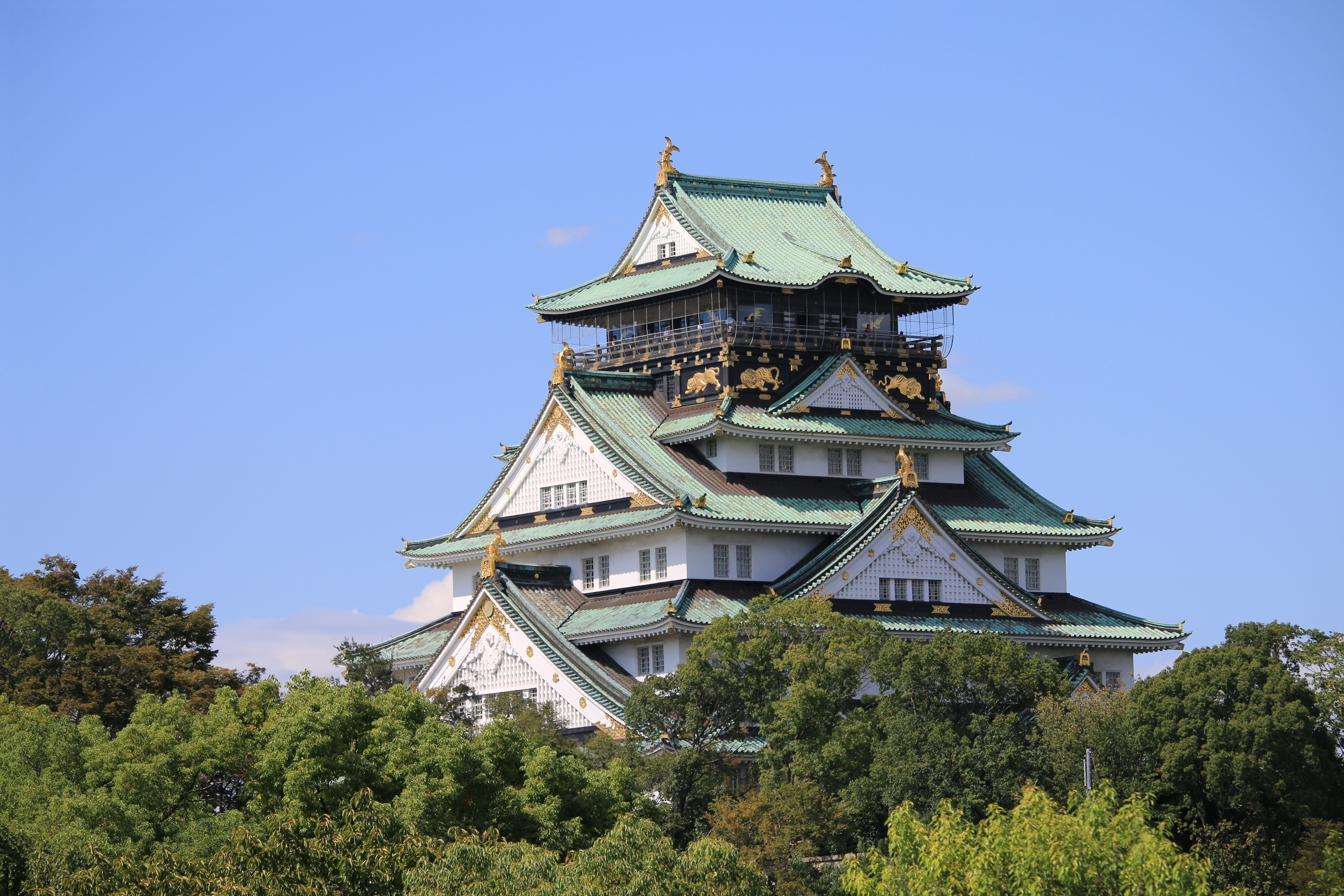
OSAKA CASTLE · CHUO
OSAKA CASTLE · CHUO
— 01 of 04 · IMMERSIVE —
THE FOUNDATION

Osaka Castle at sunrise.

the city’s military origin. 1583. The moat at dawn.

Osaka Castle was built by Toyotomi Hideyoshi in 1583 — Japan’s most powerful warlord at the time, the man who unified the country before Tokugawa took over. The castle was destroyed twice (1615 by Tokugawa, 1868 by fire), and the current donjon is a 1931 reconstruction with a modern interior — but the moats, the inner walls, the foundation stones are all original 1583 work.

The play is to arrive at 6:00am, when the castle grounds (Osaka-jo Park) are open and the locals are doing their morning runs and tai chi. The donjon doesn’t open until 9am, but you don’t need to enter it — the view from the south outer moat at sunrise, with the cherry blossoms framing the white tower against the Umeda skyscrapers behind, is the iconic Osaka image. Most tourists arrive at 11am for the tower. You’ll have the park to yourself for 3 hours.

In sakura season (early April), the Nishinomaru Garden inside the inner walls is the best blossom-viewing in Osaka. Free entry until 9am.

HOW TO DO IT
WHEN
different times, different vibes: 5:30–7:00ampark to yourself, locals running 8amcommute begins, still quiet 9amdonjon opens — first 30 min is the tourist-light window duskcastle lit gold against the Umeda neon
WHERE
Tanimachi 4-chome station · Chuo-ku · or hotel car 15 min from Umeda
BRING
Running shoes if you’ll loop the park (3.5km outer perimeter)
NOTE · HIDEYOSHI’S OSAKA Toyotomi Hideyoshi (1537-1598) is one of Japan’s three great unifiers — Nobunaga, Hideyoshi, Ieyasu. Osaka Castle was his power base, the largest fortification in Japan at the time. After his death, the Tokugawa shoguns moved the capital to Edo (Tokyo) and destroyed Osaka’s military relevance. But Osaka kept its commercial role and became the merchant kitchen of Japan — which it still is.
— 02 of 04 · CULTURAL —
THE NIGHT

Dotonbori at night.

the neon canyon. 400 years of merchant nightlife. Done with a private guide.

Dotonbori is the canal-side entertainment district that Osaka built in the 1620s — first as a theater quarter (kabuki and bunraku puppet theater), then as the city’s food and nightlife spine. The iconic Glico Running Man sign has been there since 1935. The Kani Doraku giant moving crab is from the 1960s. The Don Quijote Ebisu Tower Ferris wheel is the modern era.

The tourist way to do Dotonbori: walk through it at street level, get jostled, take selfies with the signs, eat overpriced takoyaki on Ebisu-bashi bridge. The TBT way: a private 3-hour evening tour with an Osaka food historian. You stop at 4 counters most tourists walk past — the original Aizuya takoyaki stall (since 1933), Mizuno okonomiyaki (since 1945), Daruma kushikatsu (Shinsekai, since 1929), and a sake counter behind a wooden door with no English signage. You taste, talk, walk back to the hotel by 10pm having eaten what Osaka actually eats.

This is also the easiest hero to do as a couple or solo — the food is the entertainment, the guide handles the logistics, the noise is the texture.

HOW TO DO IT
WHEN
Start 6:30–7pm. End 9:30–10pm. Most stalls peak 8pm.
WHERE
Start: Ebisu-bashi bridge (Glico sign). End: a sake counter near Namba.
GUIDE
TBT arranges English-fluent Osaka food historian. ~3 hours, 4-5 stops.
DRESS
Casual smart. Slip-on shoes (sit-down counters require shoes off).
PRIVATE BUYOUT Several Dotonbori counters can be fully booked out for TBT clients — 8-12 seats, private chef interaction, custom menu. Aizuya original location for takoyaki masterclass available. Arranged through TBT concierge.
DOTONBORI · 1620s
DOTONBORI · 1620s
KUROMON ICHIBA · “OSAKA’S KITCHEN”
— 03 of 04 · CULTURAL AND HERITAGE —
THE MARKET

Kuromon Ichiba market.

“Osaka’s Kitchen.” 580 meters of food stalls. 190+ years.

Kuromon Ichiba opened in 1822 as the central wholesale market for Osaka’s restaurants. Today it’s a 580-meter covered arcade with ~180 food vendors — fish, beef, wagyu, fugu (pufferfish), takoyaki, sea urchin, kobe beef counters that grill in front of you, sake stalls, fruit vendors selling ¥10,000 (US$65) single melons.

The play is to arrive at 8:30am — right after the morning wholesale rush ends and the tourist arcade opens, before the lunch crowd hits at 11. Walk slowly. Snack-graze your way through: one skewer at a wagyu counter, one piece of grilled uni from a fish stall, one taste of fresh-pressed orange juice. Two hours of slow grazing covers the full arcade.

This is where the Osaka Michelin chefs source their morning ingredients. You’ll see them walking with their canvas bags. The fugu tasting is the local rite of passage if you’ve never had it — pufferfish, technically poisonous, requires a licensed chef. Several stalls offer 5-piece tastings. Trust the licensing.

End at Daimaru-suehiro, the corner counter that’s been frying tempura since 1948. Lunch ¥3,000-5,000, sit at the counter, watch the third-generation master work.

HOW TO DO IT
WHEN
8:30–11am · Tue–Sat. Closed Sunday (vendors take the day).
WHERE
1 Chome-Nipponbashi · Chuo-ku · Nipponbashi Station (Sennichimae Line).
BRING
Cash for snacks. Reusable container if you’ll take wagyu/uni home (Osaka Castle picnic).
— 04 of 04 · ATHLETIC-CULTURAL —
THE MORNING PRACTICE

Sumo morning practice (asageiko).

5:30am inside a working sumo stable. The training the rest of the world doesn’t see.

Sumo is Japan’s national sport — 1,500 years old, deeply ritualized, the only major athletic tradition that still considers itself a religion. The top rikishi (sumo wrestlers) live communally in 43 working stables (heya) across Japan. They train every morning before the public sees them in tournaments. The March (Haru Basho) tournament is held in Osaka — Spring Sumo Grand Tournament at the Osaka Prefectural Gymnasium.

For 2-3 weeks before each tournament, the Osaka-based stables open asageiko (morning practice) to small groups of approved observers. You arrive at 5:30am, sit in seiza on tatami at the edge of the dohyo (clay ring), and watch the top rikishi (some weighing 350+ lbs) run sparring drills, do shiko (the leg-lift stomp), and practice the matches they’ll fight in the tournament that week.

You sit in absolute silence. No photos. No phones. No leaving until the practice ends around 8am. For a former or current professional athlete, this is the most direct connection to elite training culture you’ll find in Japan — the discipline, the bodies, the rituals, the coach (oyakata) running it all.

HOW TO DO IT
WHEN
Late February through mid-March only (pre-Haru Basho window). The Osaka tournament dates the calendar.
WHERE
Various Osaka-area stables (Asakayama-beya, Naruto-beya, others) — arranged through TBT concierge.
LEVELS
2-hour observation (the standard) · with chanko-nabe lunch (the rikishi communal stew, optional extension).
BRING
Slip-on shoes (off at the dohyo). Quiet camera-less morning. Cash gift envelope (kicho) optional — TBT provides protocol brief.
WE ARRANGE
Stable selection, English-fluent host, ride from your hotel, lunch extension if desired.
NOTE · ALTERNATIVE WINDOWS If your trip isn’t in the late-Feb to mid-March window, the same experience is available in Tokyo year-round at Ryogoku-area stables (Hakkaku-beya, others). TBT books either city based on your travel dates.
SUMO ASAGEIKO · OSAKA HEYA
A WORD ON · UNIVERSAL STUDIOS JAPAN

Skip USJ unless you have kids who specifically requested it.

USJ is well-built (Super Nintendo World, Wizarding World of Harry Potter) but it’s a 10-12 hour committed day with $300+/person tickets + Express Pass surcharges, and you’ll miss the actual Osaka. If kids are non-negotiable on a theme park, the VIP tour bundles work — TBT books. Otherwise, route the trip to Tokyo’s TeamLab Planets instead — same wow factor, half the time investment.

A WORD ON · DOTONBORI TOURIST RESTAURANTS

The neon-fronted “as seen on TV” restaurants are tourist traps.

The takoyaki stall with the giant flashing octopus and the kani crab counter with the moving claws — these are aimed at first-timers and Instagrammers. The food is fine; the prices are 2-3x neighborhood rates. The locals’ takoyaki is at Aizuya (Tamatsukuri location, original since 1933) and Wanaka. The TBT guide takes you there in §2 Hero 2.

A WORD ON · OSAKA CASTLE INTERIOR

Skip the donjon (tower interior).

The Osaka Castle donjon is a 1931 concrete reconstruction with an elevator, gift shop, and modern museum exhibits. The exterior, moats, and Nishinomaru Garden are the real experience. Walk the grounds at sunrise (see §2 Hero 1), skip the line for the elevator inside. If history matters to you, route a private guided walk through the outer baileys instead.

— 03 —
WHERE YOU REST YOUR HEAD

Where you sleep matters.

Each earns its place differently — heritage, height, character.
01 · the new flagship
CURATOR’S PICK

Four Seasons Hotel Osaka

— Kafele’s anchor. Dojima Hama, opened 2024.

Kafele’s confirmed Osaka pick (per Japan Travel Glossary). Opened August 2024 — Osaka’s newest luxury anchor. Located on Dojima Hama, the river island between Umeda and Nakanoshima. Modern sleek design — a glass-and-stone tower that reads more Tokyo than Osaka, anchored by a 7,000m² wellness floor.

INSIDER ACCESS
  • Premier Riverside Suite — Yodogawa River views, Osaka Castle visible northeast
  • JIANG-NAN CHUN — Cantonese counterpart to Four Seasons’s signature dim sum tradition
  • Garden Salon — modern Japanese tasting menu
  • The Spa — 7,000m², full pool, traditional onsen-style baths, Aman-equivalent wellness
  • Direct car access to Umeda business district + Nakanoshima museums
02 · the forbes anchor
4 CONSECUTIVE YEARS FORBES 5-STAR

The Ritz-Carlton, Osaka

— the only Forbes 5-Star in Osaka. Umeda business district.

Only Forbes Travel Guide Five-Star hotel in Osaka — 4 consecutive years. Umeda — Osaka’s modern business district. The hotel occupies floors 24-37 of a high-rise tower with sweeping skyline views across to Osaka Castle on clear days. Built-out interior reads as European country house: oil paintings, antique mahogany, leather wing chairs.

Not in TBT’s 7-brand stable but the Forbes anchor makes it impossible to leave off. Best for travelers who want classic-luxury bones with a skyline location.

INSIDER ACCESS
  • Ritz-Carlton Suite — 195m², floor-37 panorama
  • La Baie — French fine dining, Michelin-listed
  • Hanagatami — kaiseki counter
  • Splash Pool — 25m indoor pool, 28th floor with skyline view
  • Direct walk-link to Osaka Station + Grand Front Osaka mall
03 · the design pick
RIVERFRONT · NAKANOSHIMA

Conrad Osaka

— Nakanoshima Festival Tower. Sleek + design-led.

40-story Hilton-Conrad tower on Nakanoshima — Osaka’s river island museum district. Floors 33-40 are the hotel; lower floors are Asahi Shimbun newspaper HQ. The location puts you between Umeda (Kita) and Dotonbori (Minami), walking distance to both. Modern Japanese design language by Yoshioka Tokujin.

The pool + spa on floor 40 has 360° glass walls — sunset views over the Yodogawa River and Osaka Castle. Best of the city’s design hotels for clients who want contemporary over classical.

INSIDER ACCESS
  • Royal Suite — corner penthouse, two-way view (Castle + Umeda skyline)
  • Atmos Dining — modern Japanese + open kitchen on the 40th floor
  • 40 Sky Bar — sunset cocktails, 360° glass
  • The Spa — Asian-inspired wellness, sound-bath option
  • Conrad chauffeur service across Osaka
— HONORABLE MENTIONS — Three more to consider — each fits a specific kind of Osaka stay.
FOR THE DESIGN-FORWARD STAY

W Osaka

Yotsubashi. Designed by Tadao Ando — Japan’s most celebrated living architect. Concrete-and-glass aesthetic, full Marriott Luxury Collection backing. The design pick if you want architectural credentials with your stay.

FOR THE ST. REGIS LOYALIST

The St. Regis Osaka

Honmachi. The smaller-scale Marriott Luxury Collection sister property, Italianate design + signature St. Regis butler service. Quieter than the Ritz-Carlton, more discreet, often the right move for clients prioritizing service over view.

FOR THE ONSEN-IN-CITY

Hotel The Mitsui Osaka

Honmachi. Sister property to Hotel The Mitsui Kyoto. Has natural onsen drawn from a 1,000-meter underground spring inside the building. Contemporary Mitsui design with deep Japanese craft. Best for travelers who want onsen recovery without leaving central Osaka.

— 04 —
WHERE TO EAT

81 stars. Kuidaore.

Osaka has 81 Michelin-starred restaurants and 59 Bib Gourmands. The city’s motto is kuidaore — “eat yourself bankrupt.” These six anchor the experience. Then dive into Dotonbori.
THE STARS · THE THREE

The three-star tier.

— Osaka holds 3 three-star Michelin restaurants. These are the top two + the city’s most acclaimed two-star.
INNOVATIVE FRENCH-JAPANESE

Hajime

ORDER: the tasting · 12+ courses

Chef Hajime Yoneda’s concept-driven fine dining. Each course is a small art installation — visually plated, philosophically themed, ingredient-driven. Three Michelin stars retained for over a decade. 6+ months booking lead time. Osaka’s intellectual peak.

— 1 Chome-9-11 Edobori · Nishi-ku
★★★MICHELIN · THREE STARS
TRADITIONAL KAISEKI

Kashiwaya Osaka Senriyama

ORDER: the seasonal kaiseki

Master Hideaki Matsuo’s kaiseki house in the Senri Hills (north Osaka). Pristine traditional kaiseki — the format you’d expect at Kyoto’s grandfathers but transposed to Osaka. Three Michelin stars. The taxi ride out is worth it for the formal experience.

— 2-5 Senriyamanishi · Suita
★★★MICHELIN · THREE STARS
INNOVATIVE · SPANISH-INFLUENCED

Fujiya 1935

ORDER: the chef’s tasting · 15+ courses

Hommachi area. Chef Tetsuya Fujiwara’s father-son operation. Spanish-influenced modernist tasting (Fujiwara trained under Ferran Adrià at El Bulli). Two Michelin stars + a Green Star. The cult Osaka pick for travelers who’ve already eaten the 3-stars elsewhere.

— 2 Chome-4-14 Yarikujimachi · Chuo-ku
★★MICHELIN · TWO STARS · GREEN STAR
THE OSAKA SOUL

Three more — the new + the street icons.

— newly starred 2026 sushi + French · the kushikatsu icon since 1929.
SUSHI · NEW 2026

Sushi Shigenaga

ORDER: omakase · counter only

Kitashinchi. 12-seat counter. Chef Shigenaga is Kagoshima-origin and sources fish almost entirely from Kyushu. Newly awarded one Michelin star 2026. The most-discussed sushi promotion of the year in Osaka. Booking 2 months out.

— Kitashinchi · Kita-ku
MICHELIN · ONE STAR · NEW 2026
FRENCH · NEW 2026

Empathie

ORDER: the tasting · evening

Near Temma area. Chef-owner Yuji Tsuji’s French tasting — simple preparation, luxury ingredients (caviar, foie gras, truffles), often finished tableside. Newly one-Michelin-starred 2026. The TBT pick for travelers wanting French in Osaka.

— Near Temma · Kita-ku
MICHELIN · ONE STAR · NEW 2026
KUSHIKATSU · SINCE 1929

Daruma (Shinsekai original)

ORDER: the chef’s omakase kushikatsu set · ¥2,000–3,500

The Osaka street-food icon. Kushikatsu (deep-fried skewers) invented here in 1929 by the founder Yorichirō Hasebe. Five generations later, still operating in Shinsekai. THE rule: “no double-dipping the sauce” — the communal sauce bowl is sacred. The most affordable kushikatsu is also the best.

— 2-3-9 Ebisu-Higashi · Naniwa-ku (Shinsekai)
OSAKA STREET ICON · 1929
OKONOMIYAKI · DOTONBORI

Mizuno

ORDER: Yamaimo-yaki (mountain potato batter)

Dotonbori. Operating since 1945. The original “Osaka-style” okonomiyaki (savory cabbage pancake with mixed ingredients on a hot iron grill). Counter seating, watch the chef build, eat off the iron with a small spatula. Bib Gourmand — the Osaka-style pancake at its source.

— 1-4-15 Dotonbori · Chuo-ku
MICHELIN GUIDE · BIB GOURMAND
— PRIVATE CHEF · ARRANGED ON REQUEST —

Want a chef in your suite?

For longer stays or specific dietary protocols — we arrange a private Osaka chef in your suite at Four Seasons, Ritz-Carlton, or Conrad. Kuromon Ichiba market run optional. Kaiseki tasting or Osaka-style izakaya format. Quietly handled.

REQUEST A CHEF
— 05 —
CLIMATE · TRANSPORT · TIMING

How the city moves.

Climate by month, the airport route, getting around the city, and the rhythm of Osaka.
CLIMATE BY MONTH — OSAKA · °F (°C)
JAN
35–48°
2–9°C
45mm
FEB
36–51°
2–11°C
60mm
MAR
42–58°
6–14°C
105mm
APR
50–68°
10–20°C
130mm
MAY
60–77°
15–25°C
155mm
JUN
68–83°
20–28°C
205mm
JUL
75–90°
24–32°C
175mm
AUG
78–92°
26–33°C
110mm
SEP
72–84°
22–29°C
175mm
OCT
60–73°
16–23°C
115mm
NOV
49–63°
9–17°C
70mm
DEC
39–53°
4–12°C
45mm
RECOMMENDED sakura late-March/April · Osaka Castle moat photograph window · daily highs 50–73°F AVOID tsuyu rainy Jun · brutal August humidity · Tenjin Matsuri (Jul 24-25 festival crowds)
Osaka summer is humidity-heavy + crowded. The shoulder seasons (April + November) are the operating windows. If pairing with Kyoto, do both in the same trip.
AIRPORT · PRIVATE TRANSFER

KIX or ITM → city center.

Kansai International (KIX) — 50km from Osaka. International, on an artificial island. Haruka Limited Express train 50 min to Shin-Osaka, or private car 50–70 min depending on traffic.

Itami (ITM) — domestic only, 13km from Umeda. 25 min by car to Four Seasons Dojima. Most TBT clients arriving from Tokyo via ANA/JAL land here.

Private Mercedes V-Class or Lexus LS — driver meets at the gate with a name card.

GETTING AROUND

Once you’re in.

Private car + driver is the default — same driver every day, on call. Osaka Metro is excellent (English signage) but the city’s neighborhood density makes a car more efficient when you’re hitting Castle + Dotonbori + Kuromon + a hotel-spa all in a day.

Dotonbori is for walking only — pedestrian-dense canal-side district. Car drops at Ebisu-bashi, picks up at Namba 90 min later.

Shinkansen + Green Car for Kyoto (15 min), Nara (45 min), Tokyo (2h 30min), Hiroshima (1h 30min). Faster than flying for everything Kansai + western Japan.

THE DAILY RHYTHM

What you’ll actually do in Osaka.

5:30–7:00am
Osaka Castle sunrise. Park to yourself. Cherry blossom in April; gold lights against blue dawn in winter.
7:30–9:00am
Breakfast. Hotel — Four Seasons garden-side, Ritz-Carlton lounge, Conrad 40 Sky for the view. Or Kuromon Ichiba market grazing.
9:30–11:30am
Kuromon Ichiba market — slow grazing the full 580m arcade. Wagyu, uni, fugu, sake.
12:00–1:30pm
Lunch. Daimaru-suehiro tempura counter (since 1948) or Hajime / Fujiya 1935 lunch tasting.
2:00–4:00pm
The reset. Four Seasons spa onsen, Ritz-Carlton 28th-floor pool, or Mitsui’s natural hot spring. The day’s quiet middle.
4:00–6:00pm
Cultural site. Sumiyoshi-taisha shrine (1,800 years old, less touristed) or Nakanoshima art museums.
6:30–7:30pm
Golden hour. Umeda Sky Building observation deck — Osaka’s signature sunset view.
7:30–10:30pm
Dinner. Hajime, Kashiwaya, Fujiya 1935, Sushi Shigenaga, Empathie — the Michelin anchor. Or Dotonbori private food tour (see §2 Hero 2).
— 06 —
VACCINATIONS · HEALTH · KIT

What you actually need.

Required vs. recommended. What to pack.
VACCINATIONS

Required vs. recommended.

REQUIRED · DIRECT US ENTRYNone.
RECOMMENDEDRoutine boosters (MMR, Tdap, flu, COVID up to date). Japan does not require special vaccinations.
OVERBLOWNHepatitis A/B — only for extended stays. Yellow Fever — not relevant.
PRE-TRIPStandard prescription kit: anti-inflammatories, melatonin for jet-lag, motion-sickness for Shinkansen if reactive.
THE ESSENTIALS

What to pack before you fly.

TRAINING-SPEC FOOTWEARTwo pairs: comfortable walking pair for Dotonbori + Kuromon hours on your feet, and a slip-off pair for traditional restaurants. Osaka’s high step-count even at recovery pace.
ELECTROLYTESLMNT or Liquid IV — 14 packets for a 7-night trip. Osaka summer humidity is heavy.
RECOVERY TECHWhoop or Oura for jet-lag tracking. Compression sleeves for the flight. Tokyo’s UTC+9 is the harder shift — 13 hours from NYC. Castle 5:30am sunrise day 1 anchors circadian rhythm.
POWER · 100V TYPE AJapan uses 100V Type A (US flat pins, same sockets). Most US devices work without converter.
FOR THE TRAVELER WHO TRAINS

How Osaka affects the body.

SLEEP · JET LAGUTC+9 — 13 hours from NYC, 8 from London. Castle 5:30am sunrise climb day 1 anchors circadian rhythm fast.
HUMIDITY · HEAT INDEXOsaka summer averages 80%+ humidity Jul–Sep, heat index 95–100°F+. Outdoor before 8am or after 7pm only Jun–Sep.
AIR QUALITYOsaka air is clean (AQI typically 30–60). No N95 needed. Less pollen than Kyoto in spring.
TRAINING + RECOVERYFour Seasons Dojima has a 7,000m² wellness floor with full gym + traditional onsen baths. Ritz-Carlton has a 25m indoor pool floor 28. Conrad has 40th-floor pool. For specific training protocols (lifting, sport-specific), tell us in advance.
— 07 —
THE HARD TRUTHS

What we tell you that nobody else does.

The realities of Osaka that shape how the trip actually feels. Honest framing first; everything else after.
PRIORITY · 01 THE KYOTO QUESTION

Osaka may not be your primary base — and that’s okay.

Most TBT clients pair Osaka with Kyoto. Stay 4-5 nights in Kyoto at Aman, Four Seasons, or ROKU. Day-trip 15 minutes by Shinkansen to Osaka for the food + Castle. This is the right move for first-timers.

Stay in Osaka itself when: you’re traveling with family + Universal Studios on the docket · you want a Michelin-dense city without Kyoto’s tourist density · you’re routing in/out of KIX and don’t want the 80-min transfer · you’re business + leisure pairing with Umeda meetings.

PRIORITY · 02 SUMMER HUMIDITY · BRUTAL

Osaka summer is heavy.

June–September averages 80%+ humidity and 90°F+ daily highs. Heat index pushes 100°F+. The buildings + cars + concrete bounce heat back at you in Dotonbori at midday.

The fix: sunrise outdoor (Castle 5:30am), mid-afternoon spa reset, late-evening dining. Or just go April/November instead.

TYPHOON SEASON

August–September can disrupt.

Typhoon systems hitting Osaka can ground domestic flights at Itami, shut Shinkansen for 24-48 hours, and force outdoor experiences indoors. Osaka itself handles them fine, but day-trip plans to Kyoto/Nara get derailed.

The plan: if booking Aug–Sep, build flex. We monitor JMA forecasts 7 days out.

DOTONBORI AT PEAK HOURS

The neon canyon is loudest at night.

Dotonbori between 7pm and midnight is a high-volume sensory experience — bachelor parties, drinking groups, tour buses unloading. For some clients this is the appeal; for others it’s overwhelming.

The fix: private guide tour 6:30–9:30pm (counter-pace, hand-picked stops). Or visit Dotonbori at 11am for the architecture + signs without the volume.

PRIVATE · HELICOPTER · COMMERCIAL

The ways you fly.

PRIVATE JET ARRIVALKansai International (KIX) has a dedicated business aviation terminal. Direct transfer from FBO to your Osaka or Kyoto hotel.
HELICOPTER CHARTERSOsaka → Awaji Island, Osaka → Kobe, Osaka → Mt. Koya helicopter transfers all viable. Shinkansen Green Car is faster door-to-door for Kyoto/Tokyo runs.
COMMERCIAL · DOMESTICANA + JAL at Itami (ITM). Both world-class. Bullet train usually preferred for Kyoto / Tokyo runs.
SHINKANSEN > FLIGHTSFor Tokyo ↔ Osaka (2h 30min) and Osaka ↔ Hiroshima (1h 30min), Shinkansen Green Car beats flying door-to-door. JR Pass first-class is the move.
COMMERCIAL · INTERNATIONALKIX direct from Singapore, Hong Kong, ME hubs. From US: usually route through Tokyo HND/NRT first.
THE LOCAL CODE

What locals notice.

NO TIPPINGSame as Tokyo — tipping reads as transactional. Service is inside the price at your tier.
NO DOUBLE-DIPPING THE KUSHIKATSU SAUCEAt Daruma and other kushikatsu counters, the communal sauce bowl is shared by all guests. Dip your skewer once, before biting. The cabbage on the table is free + intended as a scoop for extra sauce. Locals will absolutely notice.
WALK ON THE RIGHT ON ESCALATORSOsaka’s rule — opposite of Tokyo, Kyoto, and most of Japan. Stand right, walk on the left.
DON’T STAND CHOPSTICKS VERTICALLY IN RICEThis mimics incense at a funeral altar. Lay them flat. Verified across all of East Asia.
QUIET ON TRAINS (BUT LOUDER IN OSAKA)Osaka’s volume is famously higher than Tokyo’s — but the train rule still holds. Phones on silent, no calls, normal conversation tone.
— 08 —
WHAT WE DO BEHIND THE SCENES

The bespoke details.

Kinds of arrangements made before you land.
— 01 —
WE ARRANGE

Services not on any booking site.

Quiet logistics, set before you arrive.
  • PRIVATE CHEFKaiseki or Osaka-izakaya style in your suite at Four Seasons, Ritz, or Conrad. Kuromon Ichiba market run optional.
  • SUMO STABLE MORNINGAsageiko viewing at a working Osaka heya — late Feb to mid-March pre-Haru Basho window. English-fluent host.
  • DOTONBORI FOOD HISTORIANPrivate 3-hour evening food tour — 4-5 counters most tourists walk past. Aizuya original, Mizuno, Daruma, hidden sake.
  • OSAKA CASTLE PRIVATE GUIDEEdo-period historian, walking tour of outer baileys before opening. The architecture and military context.
  • IN-SUITE WELLNESSMassage, shiatsu, breathwork, onsen-style recovery — sent to your hotel by Four Seasons or Ritz wellness teams.
— 02 —
WE OPEN

Doors before opening hours. After closing.

Private access to the sites the public lines up for.
  • OSAKA CASTLE PRE-DAWNPrivate visit to outer baileys before 9am donjon opening. Empty grounds, blue-light castle photographs.
  • SUMIYOSHI-TAISHA PRIVATE1,800-year-old shrine, private morning meditation session with the head priest.
  • KUROMON ICHIBA EARLY ENTRYBefore the tourist arcade opens — vendor-side morning grazing with the chefs sourcing for that night.
— 03 —
WE ACCESS

Doors the city keeps closed.

Relationships built over years, opened for you.
  • MICHELIN RESERVATIONSHajime (6 mo wait), Kashiwaya Senriyama, Fujiya 1935, Sushi Shigenaga (newly starred 2026) — 2-3 months out.
  • PARTNER GMsFour Seasons Osaka, Ritz-Carlton Osaka, Conrad Osaka — direct GM intros at check-in.
  • OFF-LIST PROPERTIESTownhouses in Nakanoshima, machiya restorations — not on aggregators.
  • HOTEL UPGRADESQuietly arranged before arrival, not negotiated at the desk.
— 04 —
WE TRANSLATE

The fluent people behind every visit.

English-speaking fixers, on the ground, on your terms.
  • PRIVATE GUIDESOsaka food historians, Castle/Edo-period historians, contemporary art curators — matched to your interest.
  • DRIVERSEnglish-fluent. Mercedes V-Class or Lexus LS. Same driver every day.
  • FIXERSFor complex needs — medical, last-minute Michelin reservations, sensitive errands, sumo stable bookings.
  • CULTURAL BRIEFSSent ahead of arrival — kushikatsu sauce protocol, sumo viewing etiquette, kaiseki menu translations.
— 09 —
THE SHAPE OF AN OSAKA TRIP

We don’t ship itineraries.

Bespoke means we build the rhythm around you, not the other way around. Here’s what we ask before we start.
HOW BESPOKE ACTUALLY WORKS

The other guides give you a day-by-day plan. We don’t. A bespoke trip starts with what’s true for you: your training schedule, your dietary protocols, your sleep window, the experience you’d fly for. You answer. We build.

— THE INPUTS —

What we ask before we build.

The questions that shape your trip more than any itinerary ever could.

  • 01.
    What time do you wake at home? Do you want to keep that here, or use the jet lag to shift earlier?
  • 02.
    Are you training during the trip? If so — what’s the schedule, what equipment do you need, and what climate adjustments matter?
  • 03.
    Any dietary protocol — macros, recovery nutrition, fasting window, allergens, religious or cultural restrictions?
  • 04.
    The one experience you’d fly for. Is it a meal, a place, a person, a quiet morning, something we haven’t mentioned?
  • 05.
    Density or quiet? Do you want a full city day, or the slow afternoon and the long lunch?
  • 06.
    Anniversary, milestone, recovery trip, work trip — what’s this trip for?
  • 07.
    Solo, couple, family, or group? Each shape differently.
— THE ANCHORS —

The moments we build around.

Not a checklist — a list of the kinds of anchors that often appear in a TBT-built trip.

  • The Castle sunriseThe single most Osaka-specific morning. Park to yourself, the donjon framed against the dawn skyline.
  • The Michelin anchor dinnerHajime, Kashiwaya Senriyama, or Fujiya 1935 — the trip orbits this dinner.
  • The Kuromon market grazing580 meters of food stalls, slow grazing the wagyu, uni, fugu. Osaka’s “kitchen” experience.
  • The Dotonbori food tour3 hours with a private guide, 4-5 counters most tourists walk past. Aizuya, Mizuno, Daruma, hidden sake.
  • The Sumo morningLate Feb to mid-March only. Asageiko viewing inside a working Osaka heya. For pro athletes — the most direct connection to elite training culture in Japan.
— SANCTUM —

Tell us about you. We build the rhythm.

Sanctum members answer the 7 prompts above. We build the trip from there. Flights, hotels, drivers, restaurants, private chef, motorcycle tour, paragliding, all pre-arranged before you land. No template. No itinerary you didn’t ask for.

REQUEST A SANCTUM ROUTE

What Osaka taught me.

— Kafele
SANCTUM

Want Osaka handled?

beyond the ordinary.

Sanctum members can request a custom Osaka route — flights, hotels, drivers, Michelin reservations, Dotonbori food historian, sumo stable morning (seasonal), Kuromon market access, Castle private guide — pre-booked, the whole rhythm mapped before you land.

REQUEST A ROUTE
— FROM OSAKA · 5 ROUTES BEYOND THE FOOD CAPITAL —

Osaka opens to Kansai + the Pacific.

Within 15 minutes to 2 hours by Shinkansen, train, or short flight, Osaka opens into the 5 destinations that complete a Kansai trip — the imperial capital, the deer city, the world’s finest beef, the white castle, and a Buddhist mountain monastery.

— 01 —
Kyoto
15 MIN · SHINKANSEN
The imperial capital. 1,600 temples, the kaiseki tradition, Aman Kyoto. Often paired with Osaka in the same trip.
— 02 —
Nara
45 MIN · TRAIN
Tōdai-ji’s Great Buddha (15m, world’s largest bronze). 1,000 free-roaming sacred deer. Japan’s original 8th-century capital.
— 03 —
Kobe
15 MIN · TRAIN
The world’s finest beef. Wagyu A5 omakase at Misono (since 1945) or Tor Road counter restaurants. Scenic harbor.
— 04 —
Himeji Castle
30 MIN · SHINKANSEN
Japan’s finest surviving feudal castle. UNESCO. 17th century, never destroyed. The “White Heron” — most photographed in Japan.
— 05 —
Mt. Koya (Koyasan)
2H · TRAIN + CABLE CAR
UNESCO Shingon Buddhist mountain. Overnight in a working monastery (shukubo). Vegetarian shojin ryori. The other Japan.
thebespoketraveler · Osaka · City Guide template v7
The Bespoke Atlas

Unlock the city guide

Enter your details to open this guide — and every guide in our atlas.

WELCOME BACK